Lightweight pickleball paddles: why lighter is not automatically better
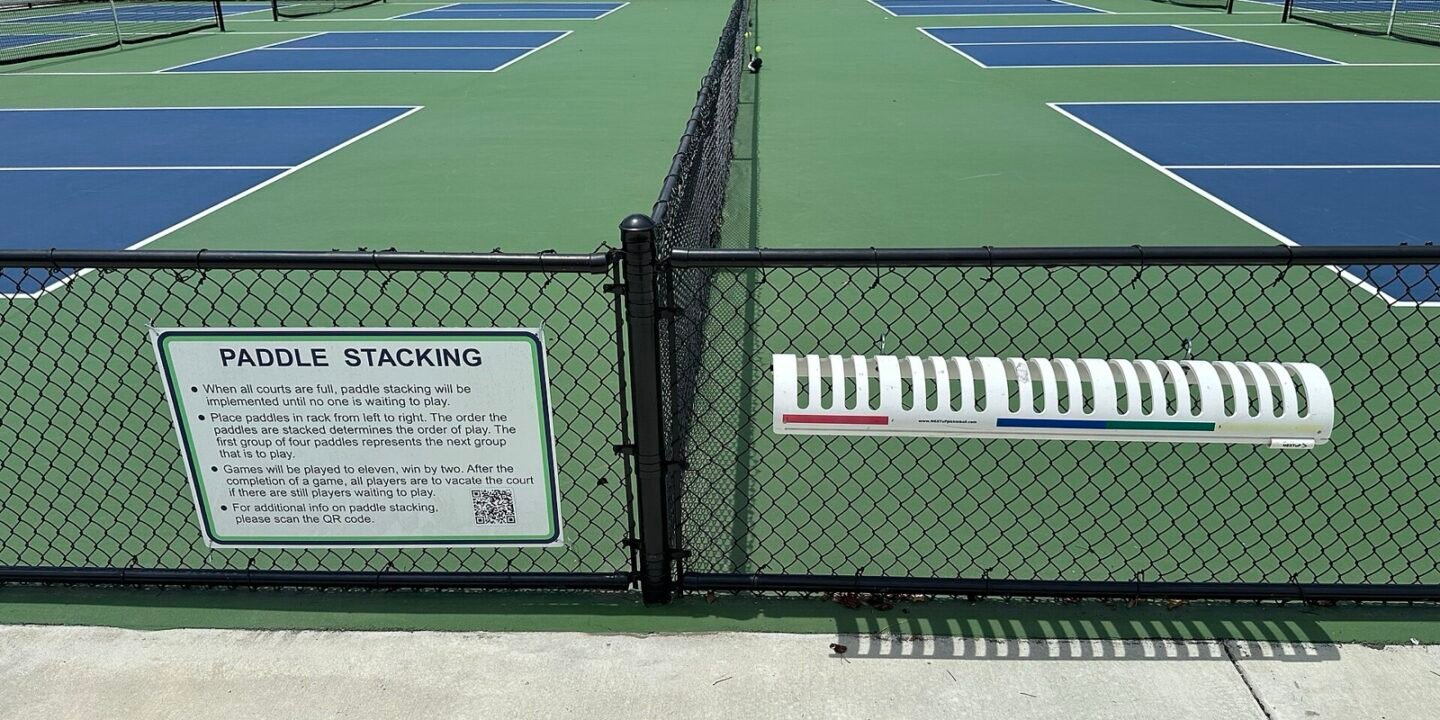
Almost every paddle on this rack sits between 7.3 and 8.5 ounces. The differences that matter are smaller than people expect.
Photo: GA Kevin · CC0 · source
.jpg)
Light pickleball paddles are the subject people fixate on and most often get backwards. “Lightweight” sounds like an upgrade — quicker hands, less strain, easier to swing. In practice a light paddle gives away something real, and for most rec players the thing it gives away costs more points than the hand speed wins.
Disclosure: this page contains affiliate links to Amazon. If you buy through one we may earn a commission, at no extra cost to you. The commission is the same whichever product you choose, so it does not influence what we recommend.
There is also a second number, almost never printed on the box, that predicts how a paddle feels far better than the one on the spec sheet. This page covers both.
The range that actually exists
Pickleball paddles are sold between roughly 6.8 and 8.7 ounces. That sounds like a wide band; it is under two ounces end to end, and the vast majority of paddles cluster tightly in the middle.
| Class | Weight | What you gain | What you give up |
|---|---|---|---|
| Light | 6.8 – 7.5 oz | Hand speed at the net, less arm strain | Depth on drives, stability on blocks |
| Midweight | 7.6 – 8.3 oz | The balance most players want | Nothing much — this is the default for a reason |
| Heavy | 8.4 – 8.7 oz | Power, plow-through, stability | Reaction time in fast hands battles |
If you take one number away from this page, take 7.8 to 8.3 ounces. That band is where the trade-offs are mildest, and it is where you should start unless you have a specific reason not to.
Swing weight: the number that actually matters
Put two paddles on a scale and they both read 8.0 ounces. Swing one and it feels like a feather; swing the other and it feels like a hammer. Nothing is wrong with the scale. The difference is where the mass sits.
Swing weight measures resistance to being rotated — how heavy the paddle feels in motion. Mass out in the head has far more effect on it than mass in the handle. This is why a 7.9-ounce elongated paddle can feel heavier through a rally than an 8.2-ounce standard-shape one.
- Low swing weight (around 105–112): fast hands, easy resets, less depth on drives.
- Mid swing weight (113–120): the all-court compromise most players end up preferring.
- High swing weight (121+): serious plow-through and power, punishing in fast exchanges at the kitchen.
Manufacturers rarely publish it, but independent testers and community spec databases measure it for most popular paddles. It is worth ten minutes of searching before you spend $180.
What a light paddle costs you
The physics is unsentimental. Ball speed off the face comes from paddle mass and paddle speed together. Take mass away and you have to swing faster to hit the same ball — and a faster swing is a less controlled swing.
Short drives
The most common symptom of a paddle that is too light is drives that land mid-court instead of deep. That is the single most punishing ball in pickleball, because it invites your opponents to step in and hit down at your feet.
Unstable blocks
When a hard drive hits a light paddle off-centre, the paddle twists in your hand and the ball goes somewhere you did not choose. Mass resists that twist. This is why players who struggle with hands battles at the net often improve immediately with a slightly heavier or wider paddle, not a faster one.
When lighter genuinely is right
There are real cases for a sub-7.5-ounce paddle, and they are not about skill level.
- Existing joint trouble. Wrist, elbow or shoulder injuries respond well to less mass to decelerate.
- You already have plenty of pace. Players coming from tennis often generate too much and need a paddle that does less.
- Hands-battle specialists. If you win points at the kitchen line with speed-ups, quicker hands may be worth the lost depth.
- Doubles at the net, all match. If you almost never drive from the baseline, you are barely using the mass anyway.
How to tune weight instead of rebuying
You do not need a new paddle to change how one feels. Lead tape costs a few dollars and moves a paddle further than most upgrades do.
- 3 and 9 o’clock — the sides, level with the middle of the face. Adds twist resistance and a wider sweet spot for very little added swing weight. Start here.
- 12 o’clock — the top edge. Adds power and plow-through, and raises swing weight sharply. Use sparingly.
- Under the grip — adds static weight while lowering the felt swing weight. Useful if a paddle feels head-heavy.
- Add a quarter-ounce at a time and play a full session before deciding. Changes that feel dramatic in your living room often vanish in a game.
A thicker overgrip does the same job at the handle end, and has the side benefit of a larger grip circumference, which tends to reduce elbow strain.
Picking a number
If you are new, buy something between 7.8 and 8.2 ounces in a standard shape and stop thinking about it. Weight is not what is costing you games at 3.0, and the beginner paddle guide covers what to prioritise instead.
If you have played a season and want to tune, decide which of these two sentences is more true of your game: “I lose points because my drives land short” or “I lose points because I get handcuffed at the net”. The first says add weight. The second says take it away — or move it toward the handle. The full paddle guide covers how weight interacts with core thickness and shape.
Where to look
You can browse pickleball paddles by weight on Amazon. Filter on stated weight, and remember that 7.8 to 8.3 ounces suits most players.
Common questions
How much should a pickleball paddle weigh?
Most players are best served between 7.8 and 8.3 ounces. Under 7.5 ounces you gain hand speed at the net but give away depth on drives and stability on blocks. Over 8.5 ounces you get power and plow-through at the cost of reaction time and, for some players, elbow soreness.
Are lightweight pickleball paddles better for beginners?
Usually not. Beginners lose more points to balls that land short than to slow hands, and a light paddle makes short balls more likely. A midweight paddle around 8 ounces does more of the work for you. The exception is a player with existing wrist, elbow or shoulder trouble, where lighter is worth the trade.
What is swing weight in pickleball?
Swing weight measures how heavy a paddle feels while you swing it, rather than how heavy it is on a scale. It accounts for where the mass sits: a paddle with weight in the head feels much heavier to swing than one with the same static weight balanced near the handle. Two paddles can both read 8.0 ounces and feel completely different.
Does a heavier pickleball paddle cause tennis elbow?
Weight alone is not the culprit. Vibration, a grip that is too small, and hitting off-centre matter more. That said, a high swing weight forces your forearm to brake the paddle harder at the end of every stroke, so if you already have elbow trouble, a lower swing weight and a slightly thicker grip usually help more than dropping static weight.
Can you add weight to a pickleball paddle?
Yes, and it is the cheapest way to tune one. Lead or tungsten tape at the 3 and 9 o'clock positions adds stability without much swing weight. Tape at 12 o'clock adds power and plow-through but makes the paddle noticeably slower. Add a quarter-ounce at a time and play a full session before adding more.