What is a dink in pickleball? The shot that decides rec games
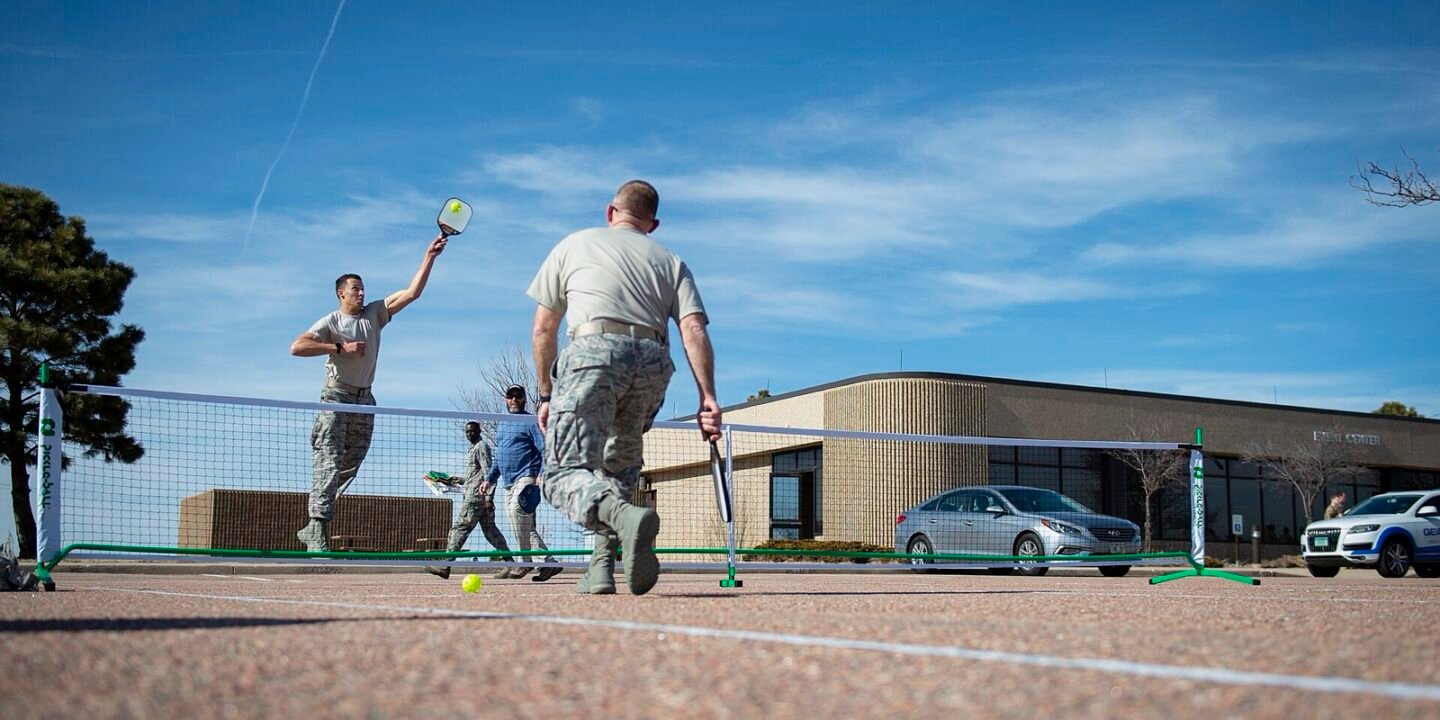
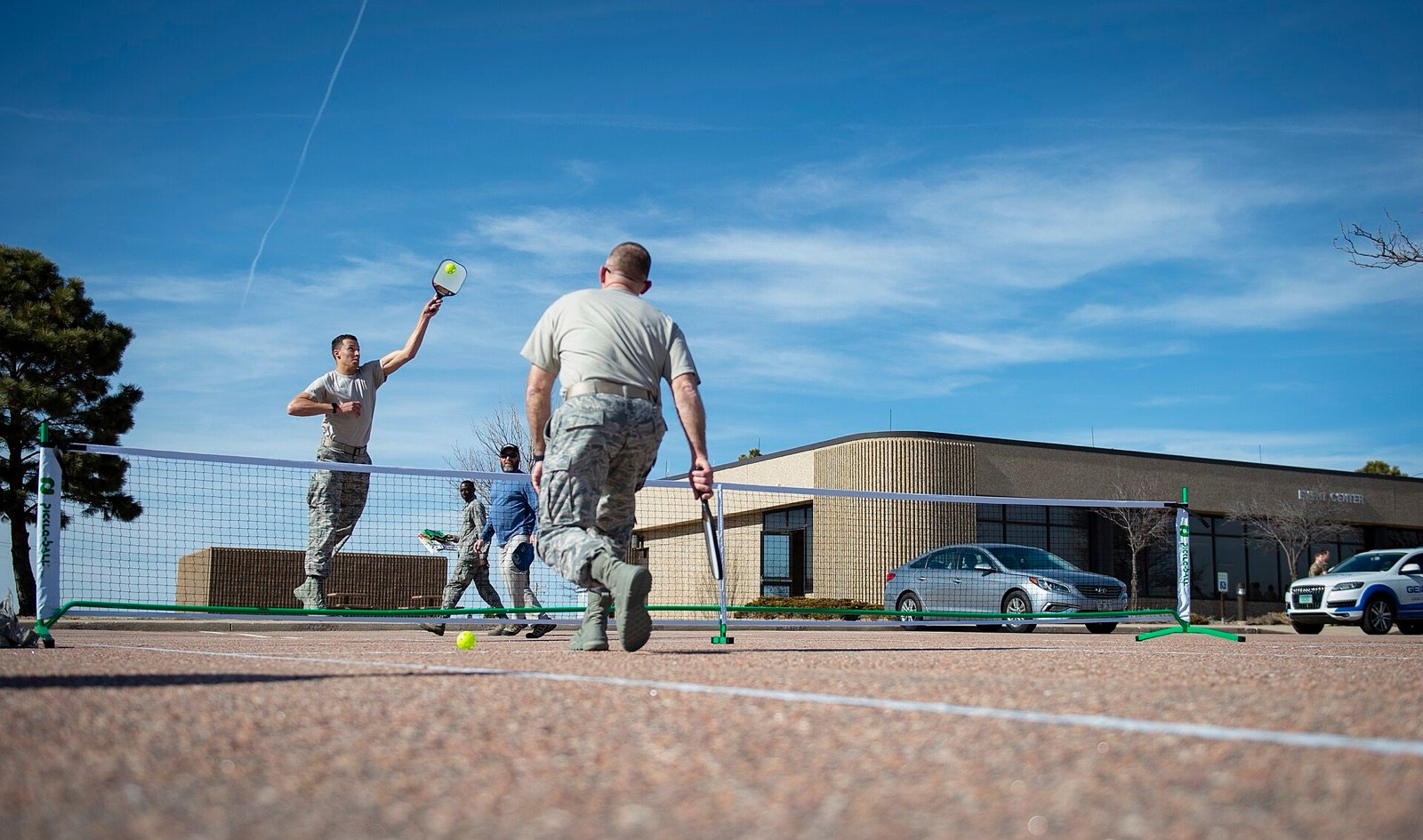
Both teams at the kitchen line, nobody swinging hard. This is where most pickleball points are actually decided.
Photo: U.S. Air Force photo by Airman Amanda Lovelace · Public domain · source
.jpg)
What is a dink in pickleball? It is a soft shot, hit from at or near the kitchen line, that arcs just over the net and lands in your opponent’s kitchen. It is not a defensive shot and it is not a way of stalling. It is how good pickleball players take away your ability to hurt them.
Disclosure: this page contains affiliate links to Amazon. If you buy through one we may earn a commission, at no extra cost to you. The commission is the same whichever product you choose, so it does not influence what we recommend.
If you have watched a rec game where four people stand at the net patting the ball back and forth and wondered what exactly is happening — this is it, and there is a great deal going on.
Why the shot exists
Everything about the dink follows from one rule: you cannot volley a ball while standing in the non-volley zone. A ball that lands in the kitchen has to bounce before your opponent can hit it, and by the time it has bounced it is usually below net height.
A ball below net height cannot be hit down. Your opponent has to lift it — which gives you a ball you can attack, or at worst another dink. That is the entire strategic engine of the soft game. If the rule is not fully clear, the kitchen rules page settles it.
You are not trying to win the point with a dink. You are trying to make it impossible for your opponent to win the point, until they make a mistake.
How to hit one
Get to the line first
A dink hit from three feet behind the kitchen line is a much harder shot than one hit from on it, because the ball has further to travel and you are reaching down for it. Establish at the line and keep your toes just behind it.
Bend your knees, not your back
The most common physical error. Bending at the waist drops your head, moves your eyes away from the contact point, and makes your paddle face unstable. Sink into your legs instead and keep your chest up.
Push from the shoulder
The stroke is a short push originating at the shoulder, with a quiet wrist and a firm-but-not-tight grip. Wrist flicks are the main source of dinks that sail long, because the wrist adds speed you cannot calibrate. Grip pressure around 3 or 4 out of 10 is about right.
Contact out in front and low
Meet the ball ahead of your body and below waist height, with the paddle face slightly open. Think about lifting the ball over the net rather than hitting it — the swing goes from low to slightly higher, and it finishes almost immediately.
Where to aim
Height over the net is the number that matters most. A dink that crosses two to six inches above the tape is unattackable. One that crosses two feet above it is a gift, and at 3.5 and above it will be put away.
- Cross court by default. The net sags to 34 inches in the middle against 36 at the posts, and the diagonal gives you more court to land in. It is the higher-margin shot — see net height for the exact numbers.
- At their feet, not their paddle. A ball landing near an opponent’s shoelaces is far harder to lift cleanly than one they can reach out to.
- To the backhand. Most players’ backhand dink is the weaker one, and it stays weaker under repetition.
- Straight ahead to change the pattern. Useful precisely because it is unexpected, but it crosses the higher part of the net, so keep it rare and keep it low.
The four mistakes that cost points
- Dinking too high. Almost always the real problem. If your dinks keep getting attacked, the fix is height over the net, not placement.
- Backing off the line. Retreating after hitting turns your next dink into a half-volley and hands the kitchen to your opponents. Hit and hold.
- Getting impatient. Trying to end a dink rally with a speed-up off a ball that is still below net height. If you have to lift it, you cannot attack it.
- Standing square and flat-footed. Stay slightly athletic with your weight forward. Dinking looks static, but the ball can be sped up at any moment.
A drill that fixes most of it
Cross-court dinks with a partner, both of you at the kitchen line, target one hundred consecutive without an error. Not one hundred total — one hundred in a row, restarting the count on every miss.
The count is the point. It forces you past the stage where dinking feels productive and into the stage where you are genuinely calibrating height and depth under fatigue, which is the state you will be in during a real third game. Most pairs discover their limit is closer to fifteen than one hundred.
When you can hold a hundred cross court, do it again straight ahead, then alternate. After that, add the constraint that either player may speed up any ball above net height — which trains the judgement, not just the stroke.
How the dink fits the rest of the game
The dink is the third of three shots that get you through a point. You serve, you return deep and come in, you hit a third shot drop to buy time to reach the line, and then you dink until someone makes a mistake.
Rec players usually skip straight from the third shot to trying to win the rally. Learning to stay in the soft game is the single biggest jump between 3.0 and 4.0, and it needs no extra athleticism — only patience and about six inches of net clearance.
Where to look
You can browse control-oriented paddles on Amazon. A 16mm core holds the ball on the face slightly longer, which is what makes dinks easier to keep low.
Common questions
What is a dink in pickleball?
A dink is a soft shot hit from at or near the non-volley zone line that arcs over the net and lands in your opponent's non-volley zone. It is hit deliberately low and slow so that the opponent cannot attack it — a ball that lands in the kitchen must bounce before they can volley it, which forces them to hit up rather than down.
Why is dinking important in pickleball?
Because you cannot attack a ball that is below net height. Dinking is how you take away your opponent's ability to hit down at you, and how you wait for them to pop one up. In doubles above about 3.0 level, most rallies pass through a dinking exchange, and the team that loses patience first usually loses the point.
How do you hit a dink in pickleball?
Get to the kitchen line, bend at the knees rather than the waist, and push the ball with a shoulder motion rather than flicking the wrist. Contact should be out in front and below your waist, with the paddle face open and moving from low to slightly higher. The stroke is short — think of lifting the ball over the net, not hitting it.
What is the difference between a dink and a drop shot?
Position. A dink is hit from at the kitchen line to your opponent's kitchen, usually in an extended exchange. A drop shot, most often the third shot drop, is hit from mid-court or the baseline and is designed to land soft in the kitchen so that you have time to advance to the line. The dink keeps you where you are; the drop moves you forward.
Should you dink cross court or straight ahead?
Cross court is generally safer and it is the shot to default to. The net is two inches lower in the middle, the diagonal gives you more court length to work with, and a cross-court dink pulls your opponent wide. Straight-ahead dinks are useful for changing the pattern and attacking a weak backhand, but they travel over the higher part of the net with less margin.