What Is the 10-Second Rule in Pickleball?
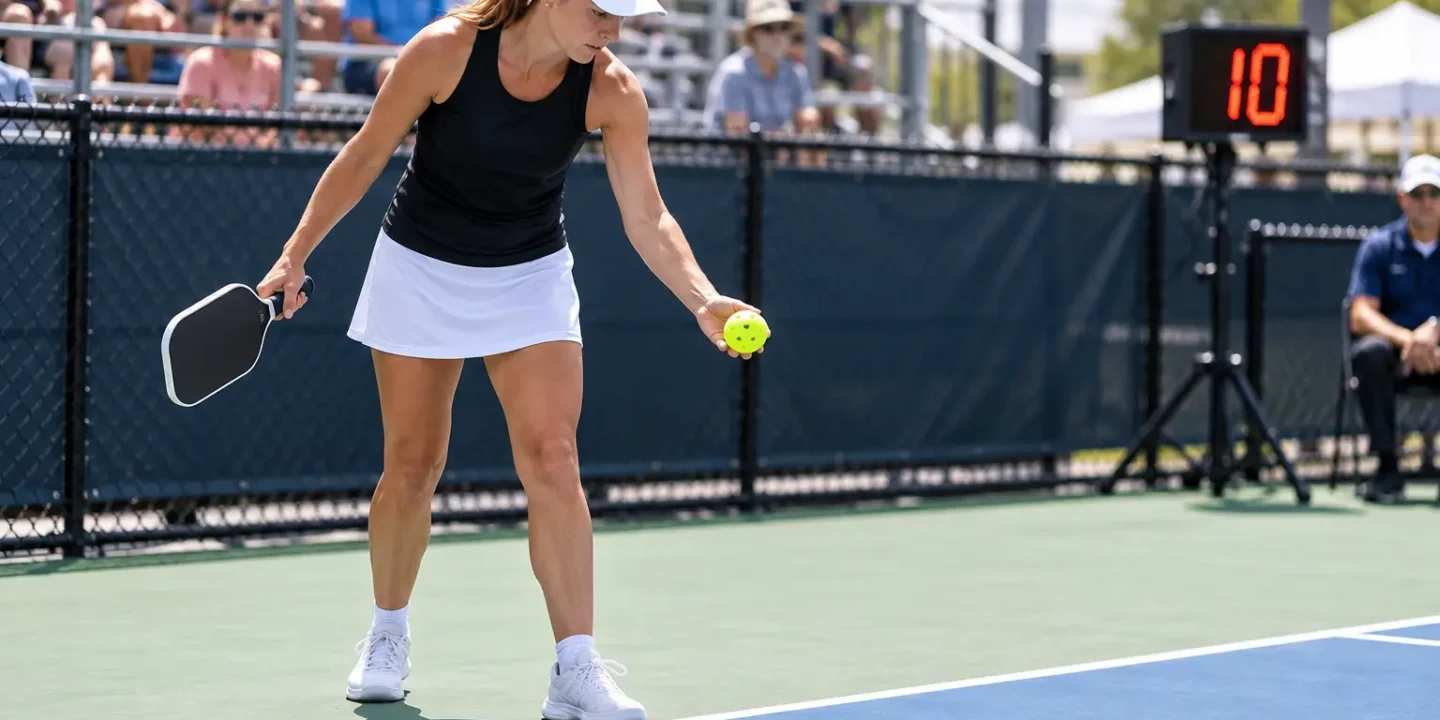
The 10-second rule in pickleball requires the server to serve within 10 seconds after the score has been called. If the server does not make the serve in time, it is a fault against the serving side.
The rule keeps games moving and prevents a server from delaying play indefinitely. It applies whether the score is called by a referee or, in an unofficiated game, by the server.
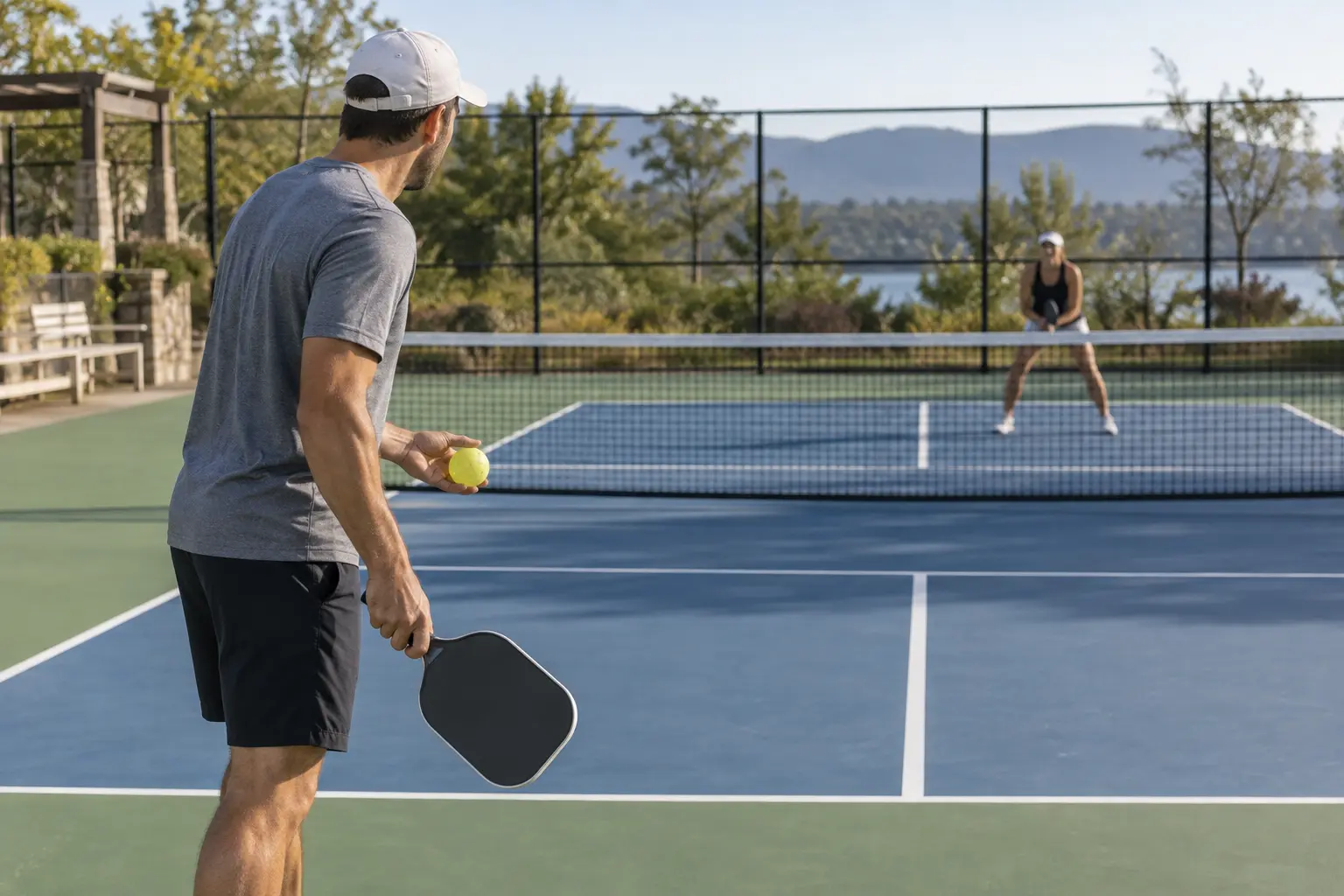
When does the 10-second clock start?
The countdown begins after the complete score has been called. In traditional doubles scoring, that means all three numbers: the serving team’s score, the receiving team’s score, and the server number. In singles, the score has two numbers.
The server should not begin the service motion before the full score is called. Once the call is complete, the server has up to 10 seconds to strike the ball.
What happens if you take longer than 10 seconds?
Failing to serve within the limit is a fault. Under traditional side-out scoring, the serving team loses the serve or moves from the first server to the second server in doubles. If the second server commits the fault, service passes to the opponents.
In casual games, players often give a friendly reminder rather than timing every serve. In tournament play, the rule can be enforced strictly.
Why does pickleball have this rule?
- Pace of play: it prevents long pauses between rallies.
- Fairness: neither side can use delay to disrupt rhythm.
- Consistency: every server works within the same window.
- Readiness: it encourages players to prepare before the score is called.
Do receivers also have to be ready?
Both teams should be ready when the score is called. A player who is not ready should signal before the score begins. Once the score has been called, “not ready” signals generally do not stop the server from completing a legal serve, unless there is a genuine hindrance or the referee stops play.
Do not use a readiness signal simply to interrupt a server or slow the game. Good etiquette is to retrieve the ball, take your position, and make eye contact before the next score call.
Can I bounce the ball during the 10 seconds?
You may perform a normal pre-serve routine as long as you complete the serve before time expires. Some players bounce the ball, adjust their grip, or take a breath. A shorter and repeatable routine is usually more reliable than using the full ten seconds.
Remember that a legal drop serve requires an unassisted drop. You cannot throw the ball down or toss it upward to create the bounce.
Does the 10-second rule apply after a let or replay?
When a rally is replayed and the score is called again, a new 10-second window begins after that score call. If play is stopped for an outside ball, equipment issue, or other valid interruption, wait until the court is ready and the score is recalled.
Common misunderstandings
“I get 10 seconds before I call the score.”
Not exactly. The rule’s timed window begins after the score call. In self-officiated play, do not exploit control of the score call to create a long delay.
“I must serve immediately.”
No. You may take a few seconds to settle yourself, provided contact occurs within the limit.
“The receiver can stop me after the score.”
A late readiness signal is not a license to delay every rally. If there is a legitimate safety problem or distraction, stop and resolve it; otherwise, play should continue.
A simple pre-serve routine
- Move to the correct service position.
- Check that the receiver is reasonably ready.
- Call the full score clearly.
- Choose a large target inside the service court.
- Take one breath and serve.
This routine normally takes only three to five seconds and leaves plenty of margin.
Frequently asked questions
Does the rule apply to both volley serves and drop serves?
Yes. The time limit concerns when the serve is made, not which legal service method you choose.
Who calls the violation?
In officiated play, the referee enforces it. In recreational play, players are responsible for fair self-officiating and should address repeated delays calmly.
Can I change my mind about where to serve?
Yes, as long as you remain in the proper serving position and complete a legal serve before the ten seconds expire.
Bottom line
Once the score is completely called, the server has 10 seconds to serve. Prepare first, use a compact routine, and avoid unnecessary delays. The rule is easy to follow when your feet, grip, and target are ready before you announce the score.