What Serve Is Banned in Pickleball?
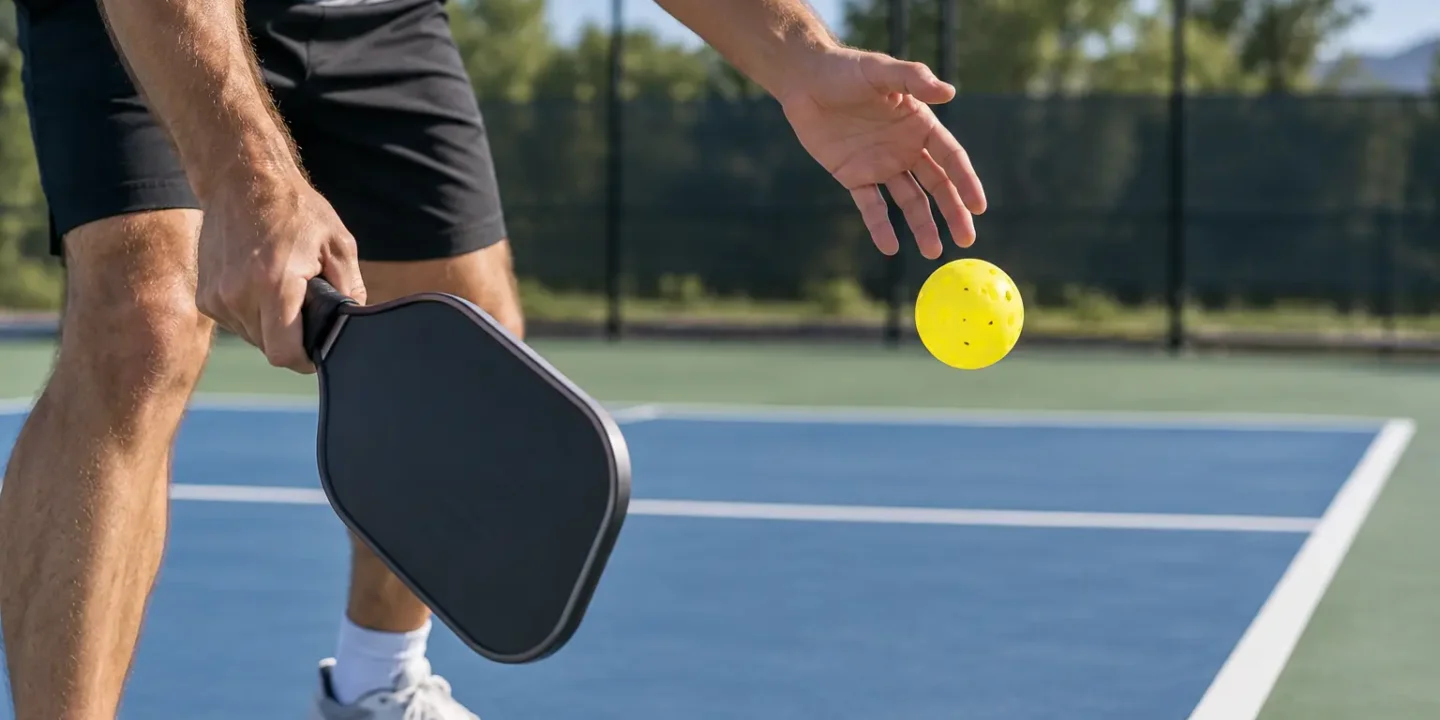
The banned pickleball serve is a serve that deliberately adds spin to the ball during the release before paddle contact. This includes the famous “chainsaw serve” and other pre-spin techniques using the hand, fingers, paddle, or body.
Spin itself is not banned. A server may still create topspin or sidespin with the paddle when striking the ball. The restriction applies to manipulating the ball during its release.
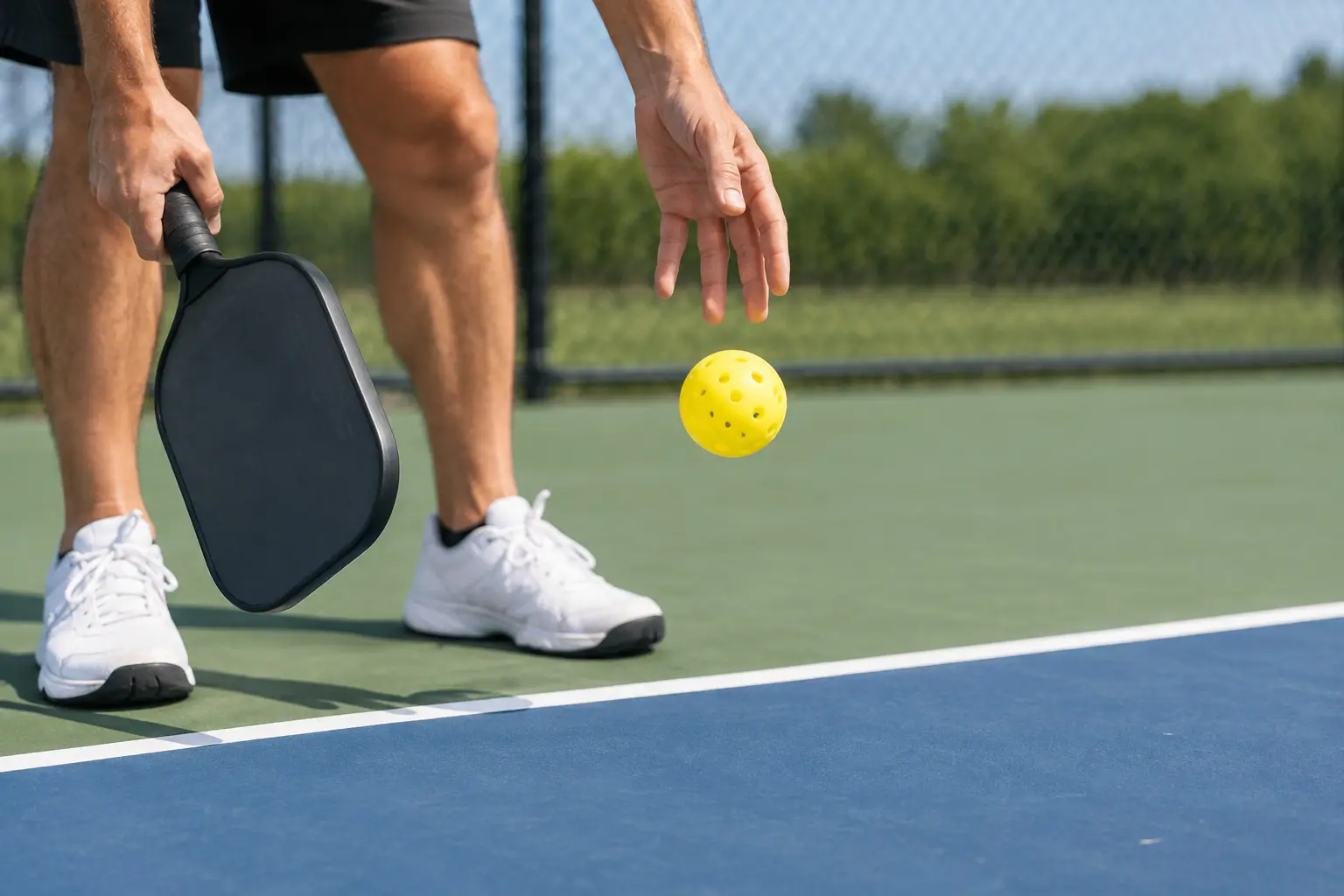
What was the chainsaw serve?
The chainsaw serve became known for producing extreme, unpredictable spin. Players rolled the ball against the paddle face, paddle handle, or fingers before striking it. The pre-spin combined with paddle contact could make the bounce kick sharply and made the serve unusually difficult to read.
Rule makers prohibited deliberate pre-spin so receivers could see a normal release and so serving remained based primarily on the paddle stroke rather than hidden hand manipulation.
What is illegal during the release?
- Rolling the ball forcefully off the fingers to create spin.
- Rubbing or rolling the ball against the paddle before contact.
- Using another part of the body to impart rotation.
- Hiding the release so the receiver cannot see it.
- Throwing the ball down or tossing it upward for a drop serve.
Some natural rotation can occur when you release the ball. The important distinction is intent: you may release it normally, but you may not manipulate it to add spin before the strike.
What spin serves are still legal?
You can brush up the back of the ball to create topspin, cut across it for sidespin, or combine spin with placement. All of that spin must be created by the paddle at contact.
A deep topspin serve is one of the most effective legal choices because it can clear the net safely, dip into the court, and jump toward the receiver after the bounce.
Are volley serves banned?
No. USA Pickleball recognizes both the volley serve and the drop serve. A volley serve strikes the ball before it bounces and must follow the applicable service-motion requirements. A drop serve is hit after the ball bounces from an unassisted release.
A legal serve must also be made from the correct position behind the baseline and travel diagonally into the opponent’s correct service court beyond the kitchen.
What makes a volley serve illegal?
A volley serve can be faulted when it does not satisfy the required underhand motion. Players should use a clear upward arc, contact the ball below the waist, and keep the paddle head in the required position at contact. The exact enforcement standard may differ in some professional events, so tournament players should check the rules for their governing organization.
What makes a drop serve illegal?
The drop must be unassisted. You may release the ball from your hand or allow it to roll off the paddle by gravity, but you may not propel it downward, toss it upward, or otherwise add force to manufacture a different bounce.
How to hit a legal spin serve
- Stand behind the baseline in the correct service area.
- Use a plain, visible release with no deliberate finger spin.
- Accelerate the paddle from low to high.
- Brush the back or outside of the ball at contact.
- Aim deep with enough margin from the baseline and sideline.
Start with placement before adding pace. A controlled deep serve to the backhand is usually more effective than an extreme spin attempt that misses.
How can receivers handle spin?
- Watch the paddle path rather than the server’s body movement.
- Give yourself space behind the baseline.
- Use a compact swing and contact the ball in front.
- Aim the return high and deep through the middle.
- Move toward the kitchen only after completing the return.
Frequently asked questions
Can I spin the ball with my fingers before serving?
No. Deliberately imparting spin during the release is prohibited.
Can the ball naturally rotate when I drop it?
Yes. A small amount of natural rotation is expected. The fault involves intentional manipulation to add spin.
Can I create sidespin with the paddle?
Yes. Spin applied at paddle contact is legal, provided the rest of the serve meets the rules.
Is the drop serve legal?
Yes. It remains a legal option when the ball is released without being tossed or driven and is struck after the bounce.
Bottom line
The serve that is banned is the pre-spun or manipulated-release serve, including the chainsaw serve. Legal serving still allows plenty of variety: use paddle-generated topspin, sidespin, pace, depth, and placement to create pressure without crossing the line.