4 Pickleball Mistakes Holding Back Your Game (And How to Fix Them)
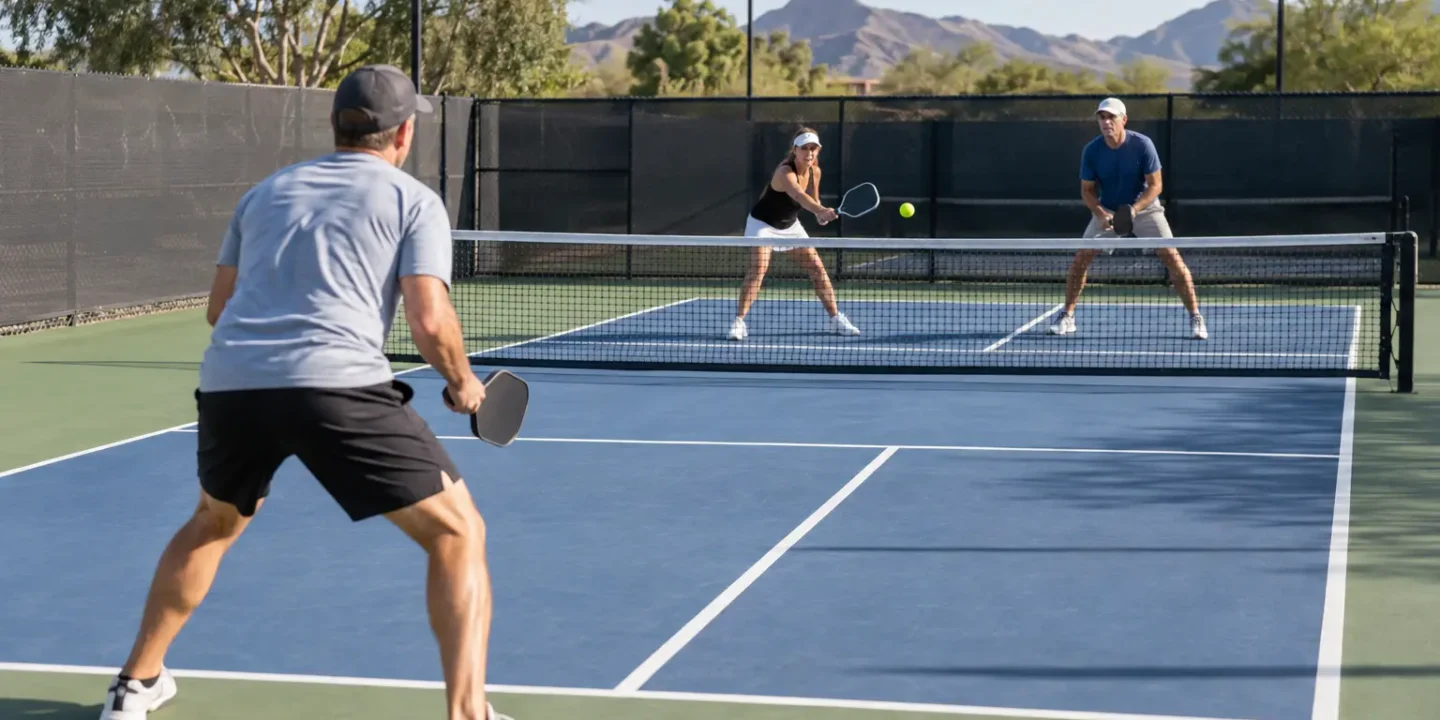
You play several times a week. You bought a better paddle. You watch pickleball videos and practice your serve. Yet your game still feels stuck.
Sound familiar?
The frustrating truth is that improvement is not always about working harder. Many recreational players repeat a few habits that worked when they were beginners but become liabilities against stronger competition. If you are searching for how to get better at pickleball, start by correcting these four common pickleball mistakes: poor positioning, hitting every ball too hard, lacking a dependable third-shot strategy, and playing without purposeful practice.
Fixing even one of these problems can change the way you move, choose shots, and handle pressure. This guide explains what is going wrong and gives you practical drills you can use immediately.
1. You Are Playing the Ball Instead of Playing the Court
One of the most damaging pickleball mistakes is focusing only on the ball. Tracking the ball matters, but experienced players are also reading the court. They notice where their partner is standing, which opponent is moving, where the open space is, and what position they need after their shot.
Before every contact, ask yourself:
- Where is my partner?
- Are my opponents established at the Kitchen?
- Is there an open gap through the middle?
- Am I balanced when my opponent hits?
- Where should I recover after this shot?
USA Pickleball’s positioning guide explains why players should work toward the Non-Volley Zone line safely and move in coordination with their partner.
Stop Camping at the Baseline
New players often feel safer deep in the court because they have more reaction time. But remaining near the baseline gives opponents more space and more angles. When the other team controls the Kitchen while you stay back, they can volley your drives early, drop balls at your feet, and force you to defend.
The solution is not to sprint forward blindly. You need to earn your way to the Kitchen. A controlled third-shot drop, a well-placed drive, or a soft reset can create the time you need to advance.
Think of forward movement as a series of decisions. Hit, move, split step, read the reply, and move again when the next ball allows it.
Do Not Run Through Your Shots
Many players hit a decent third shot and immediately charge toward the net. If the opponent contacts the ball while they are still running, they are forced to volley without balance.
Use a split step as your opponent prepares to hit. Your feet should become stable, your paddle should be ready, and your body should be able to move in either direction. After you read the ball, continue forward if it is safe.
A Simple Positioning Drill
Play a practice game where your main goal is not winning. After every shot, ask: Am I standing in the best place for the next ball? Pay attention to whether you and your partner move together. If one player advances while the other stays deep, opponents can attack the opening between you.
This simple awareness drill gradually turns correct positioning into an automatic habit.
2. You Are Trying to Hit Everything Hard
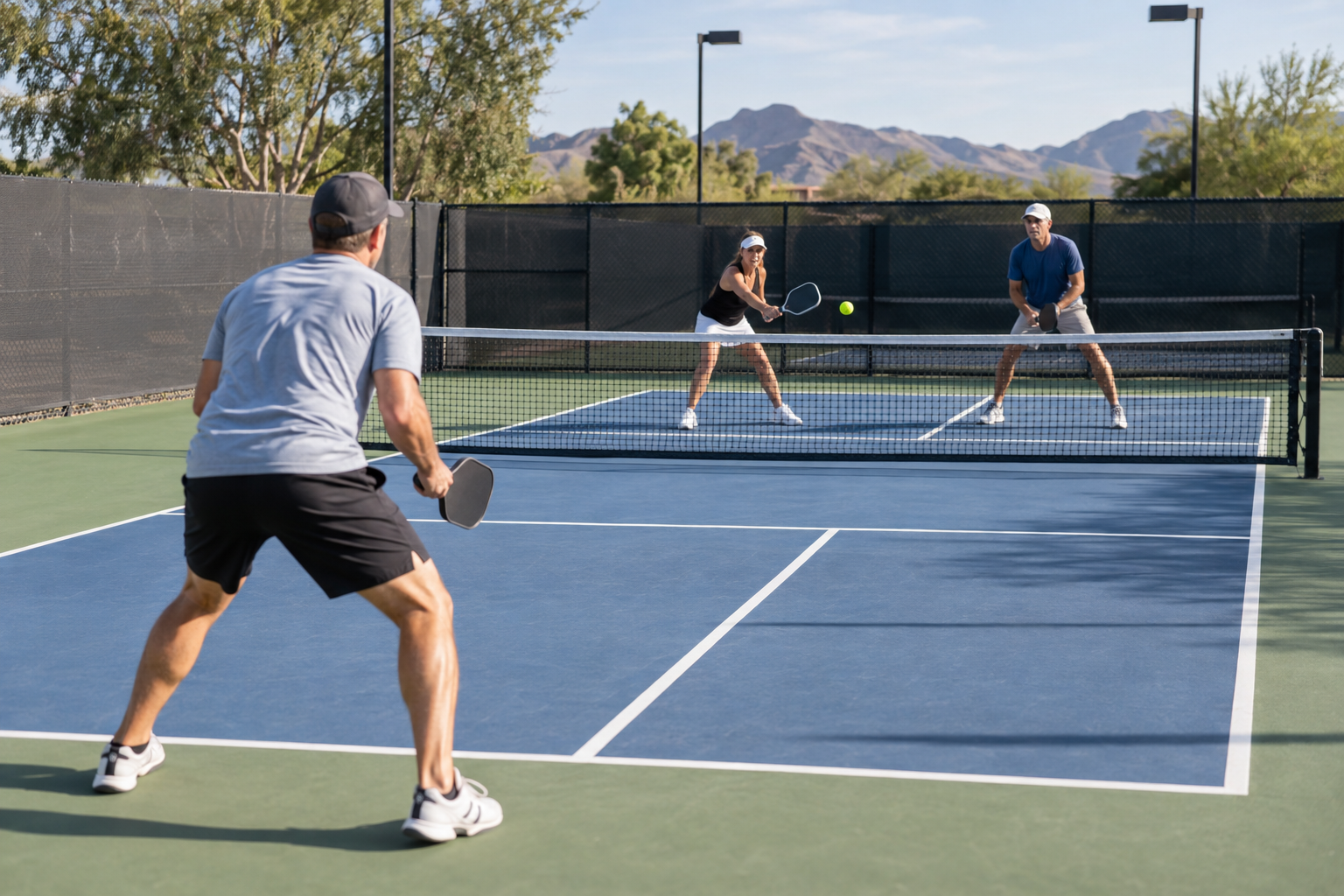
Power feels rewarding. A fast drive that flies past an opponent can make you believe that harder always means better. That approach may work against new players, but it becomes unreliable against opponents who can block, reset, and redirect pace.
Pickleball rewards placement, patience, and control. Power is useful, but only when the ball, your balance, and your court position make an attack sensible.
The fundamentals recommended by USA Pickleball emphasize control and choosing genuinely attackable balls instead of forcing offense from poor positions.
Learn Which Balls to Attack
A simple decision system can improve your shot selection:
- Ball above net height: Look for a controlled attack toward open space or an opponent’s feet.
- Ball around net height: Consider your balance, court position, and the location of your opponents before accelerating.
- Ball below net height: Reset, dink, or lift the ball safely. A hard upward swing often ends in the net or sails long.
The best players are not attacking every ball. They are waiting for the right ball.
Learn to Reset the Rally
A reset is not surrender. It is a smart defensive shot that takes pace away and gives you time to regain position.
Imagine you are trapped in the transition zone and an opponent drives the ball at your feet. Swinging harder usually increases the difficulty. Instead, soften your grip, keep your paddle stable, absorb the pace, and guide the ball into the Kitchen.
You do not have to win the rally with the shot you are hitting right now. Sometimes the smartest shot simply creates a better opportunity on the next ball.
Placement Is Often More Dangerous Than Power
Experienced recreational players do not always hit harder. They make opponents uncomfortable. They target the feet, backhand, middle, or open space created by movement.
USA Pickleball’s strategy guide discusses targeting an opponent’s backhand and using placement rather than relying entirely on pace.
During your next game, try hitting at roughly 70 percent power with a specific target. You may create more weak returns while making fewer unforced errors.
3. You Do Not Have a Reliable Third-Shot Strategy
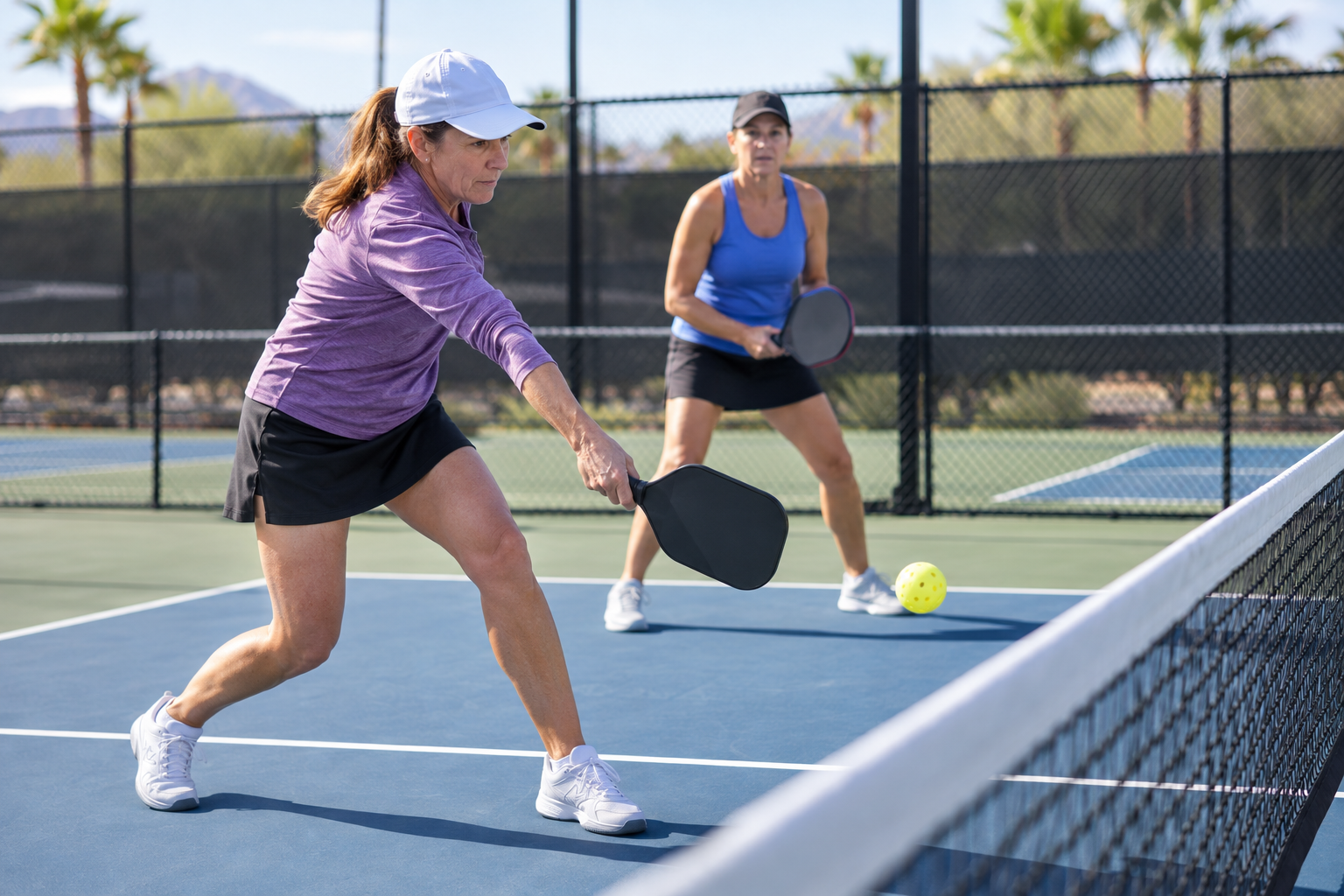
The third shot is where many recreational rallies break down. The serve goes in, the return comes deep, and the serving team must solve an immediate positioning problem.
Some players drive every third shot. Others attempt a delicate drop without understanding its purpose. The result is often a ball in the net, a high floater, or a rushed transition.
Why the Third Shot Matters
The returning team usually has the first opportunity to establish position near the Kitchen. The serving team must let the return bounce, so it often begins the third shot near the baseline. Your third shot should help neutralize that disadvantage.
You generally have two main choices:
- Third-shot drive: A firm, controlled ball designed to pressure the returner, create a weak volley, or set up a softer fifth shot.
- Third-shot drop: A soft shot that lands in the Kitchen, forces opponents to hit upward, and gives your team time to move forward.
Neither choice is automatically correct. The right option depends on the return, your balance, your strengths, and your opponents’ positions. Read USA Pickleball’s guide to mastering the third shot for a deeper comparison.
When a Third-Shot Drop Makes Sense
A drop is especially useful when both opponents are established at the Kitchen and waiting to block a drive. By landing a soft ball in front of them, you reduce their ability to attack downward and buy your team time to advance.
A good drop does not need to win the rally. Its main purpose is to improve your court position.
Stop Chasing the Perfect Drop
Players often become obsessed with landing the ball inches beyond the net. That tiny target creates unnecessary errors. Your first priority is clearing the net and keeping the ball difficult to attack.
A slightly high drop may still give you another ball. A drop in the net ends the rally immediately. The USA Pickleball third-shot drop lesson recommends giving yourself enough margin and prioritizing consistency.
Third-Shot Drop Drill
- Place a towel or marker in the Kitchen as a target.
- Stand near the baseline and hit 20 drops.
- Count shots that clear the net, land in or near the Kitchen, and stay difficult to attack.
- When you can make 15 out of 20, add forward movement.
- Hit the drop, move, split step as your partner returns the ball, and then reset again.
This drill connects the stroke to the movement pattern you will need in a real point.
4. You Are Playing More Pickleball Instead of Practicing Pickleball
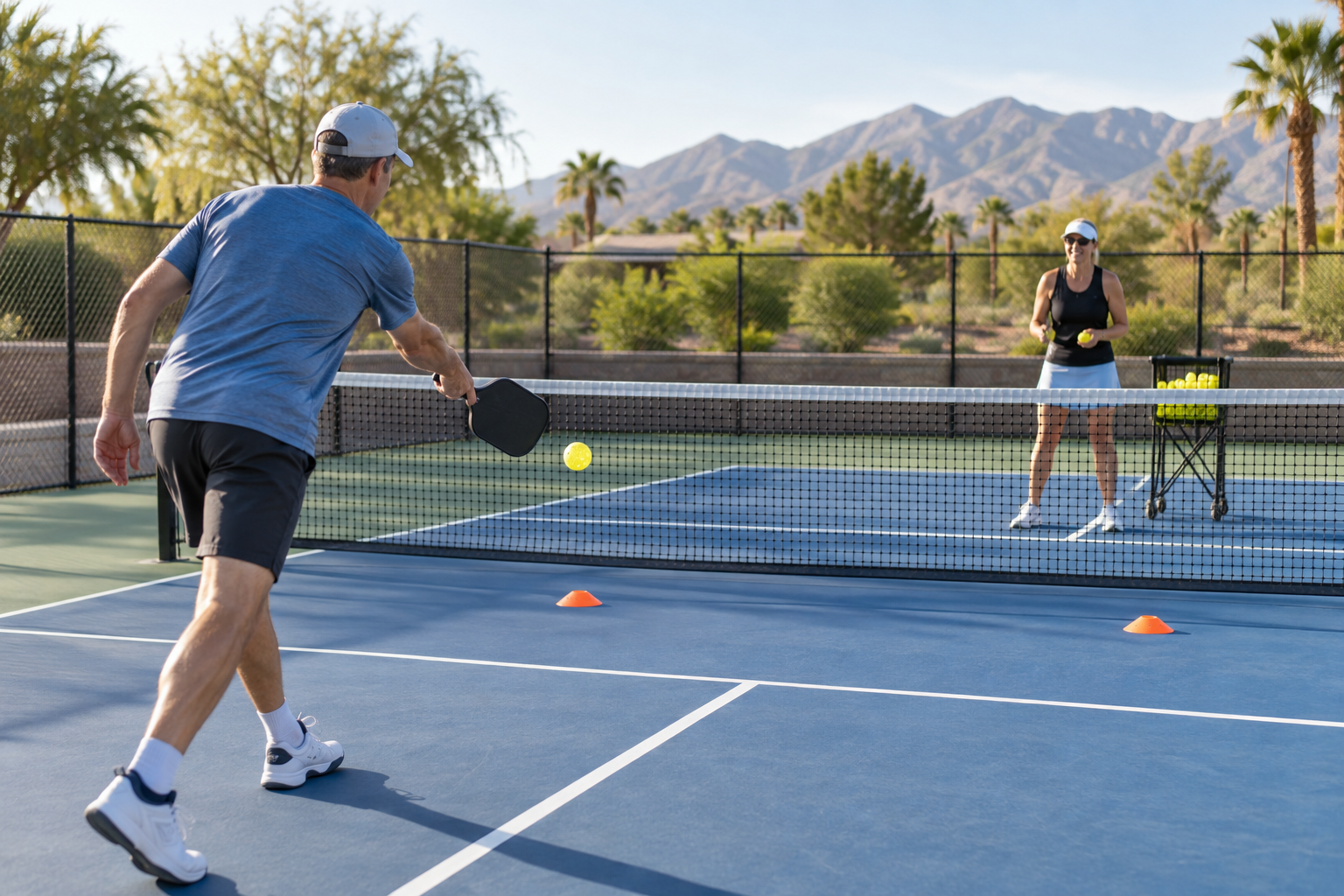
Playing for three hours is not the same as practicing for three hours. You may hit hundreds of balls during open play, but how many backhand resets, crosscourt dinks, deep returns, or third-shot drops did you repeat with intention?
During a game, your goal is usually to win. During practice, your goal is to improve. Those objectives produce different choices.
Games Can Hide Your Weaknesses
Suppose your backhand dink is unreliable. In a competitive game, you will naturally avoid it and run around the ball to hit a forehand. That may help you win today, but your backhand will still be weak months later.
Purposeful practice does the opposite. It places you in uncomfortable situations repeatedly until your weakness becomes dependable. USA Pickleball’s improvement tips also encourage players to work deliberately on uncomfortable shots rather than avoiding them.
Use an 80/20 Practice Structure
Spend about 80 percent of a focused session drilling one skill, then spend the remaining 20 percent playing points where you deliberately use that skill.
For example:
- Third-shot session: Practice straight and crosscourt drops, then play points where your goal is to reach the Kitchen with a controlled third or fifth shot.
- Dinking session: Practice forehand, backhand, and crosscourt dinks, then play Kitchen-only points.
- Return session: Hit repeated deep returns, then play points where your pattern is return deep, advance, split step, and establish position.
- Reset session: Practice absorbing pace in the transition zone, then begin points from that difficult area.
You are building repeatable patterns instead of simply accumulating games.
The Hidden Problem: Trying to Improve Everything at Once
You watch one video about serving, another about topspin, then clips about stacking, Ernes, ATPs, paddle speed, and advanced deception. Suddenly you are trying to remember a dozen ideas during a rally that lasts six seconds.
That is not a lack of motivation. It is overload.
Choose one specific problem and work on it until the movement becomes familiar. Instead of saying, “I need a better backhand,” define the weakness precisely: “I struggle with backhand resets from the transition zone.” A specific problem gives you something you can measure and train.
A Simple 30-Day Pickleball Improvement Plan
Week 1: Positioning
Focus on advancing safely, moving with your partner, split stepping before the opponent contacts the ball, and recovering after every shot. Do not measure success only by wins. Measure whether you were balanced and in the right place.
Week 2: Control
Reduce unnecessary power. Work on resets, blocks, dinks, and controlled volleys. Try playing games at 70 percent pace while choosing a target before every shot.
Week 3: Third-Shot Decisions
Practice both third-shot drops and drives. More importantly, learn when to use each one. Track how often your third shot allows your team to advance or earn a manageable fifth shot.
Week 4: Your Biggest Weakness
Select one narrow problem and build a drill around it. Record your results at the beginning and end of the week. Measurable progress creates confidence and shows you what to practice next.
Bonus Habit: Keep Your Paddle Ready
Players often admire their previous shot, relax their hands, and let the paddle drop. Then the opponent speeds up the next ball and they are late.
Keep your paddle in front of your body and expect every ball to come back. A compact ready position helps you react during fast exchanges and prevents unnecessary backswing. Small habits like this can produce surprisingly large improvements.
Which Pickleball Mistake Should You Fix First?
- If you are constantly defending: Work on positioning and advancing safely.
- If balls frequently go long or into the net: Reduce unnecessary power and improve control.
- If you cannot reach the Kitchen while serving: Develop a reliable third-shot plan.
- If you have played for months without improvement: replace some games with deliberate drills.
Do not try to repair all four problems tomorrow. Pick the mistake that costs you the most points, create a simple practice goal, and stay with it long enough to see change.
Frequently Asked Questions About Pickleball Mistakes
What is the most common pickleball mistake?
Poor positioning is one of the most consequential mistakes because it affects every shot that follows. Staying too deep, moving at the wrong time, or failing to move with your partner can make otherwise solid strokes ineffective.
How can I get better at pickleball quickly?
Focus on one measurable weakness instead of trying to improve everything at once. Combine deliberate repetition with game-like situations so the skill transfers into real rallies.
Should beginners focus on power or control?
Control should generally come first. Consistent placement gives you a foundation for adding pace later. Power without balance or accuracy usually creates more unforced errors.
How important is the third-shot drop?
It is especially valuable when opponents are already established at the Kitchen because it can neutralize their attack and help the serving team advance. The third-shot drive is also useful, so strong players learn to choose between them.
Where should I stand in pickleball?
Your position changes throughout the rally, but establishing a balanced position near the Non-Volley Zone line is generally advantageous once the two-bounce rule and the rally situation allow you to advance safely.
Final Thoughts
Improving at pickleball is not always about learning a flashy new shot or buying another paddle. Often, the fastest progress comes from removing mistakes already hiding in your game.
Improve your court positioning. Choose control before unnecessary power. Develop a dependable third-shot strategy. Spend part of your court time practicing instead of only playing.
Do those things consistently and you will build something more valuable than an occasional highlight-reel winner: a game you can rely on.
Explore more practical guides, equipment advice, and playing tips on KnowPickleball.com.