Best pickleball paddle for spin: what actually creates it
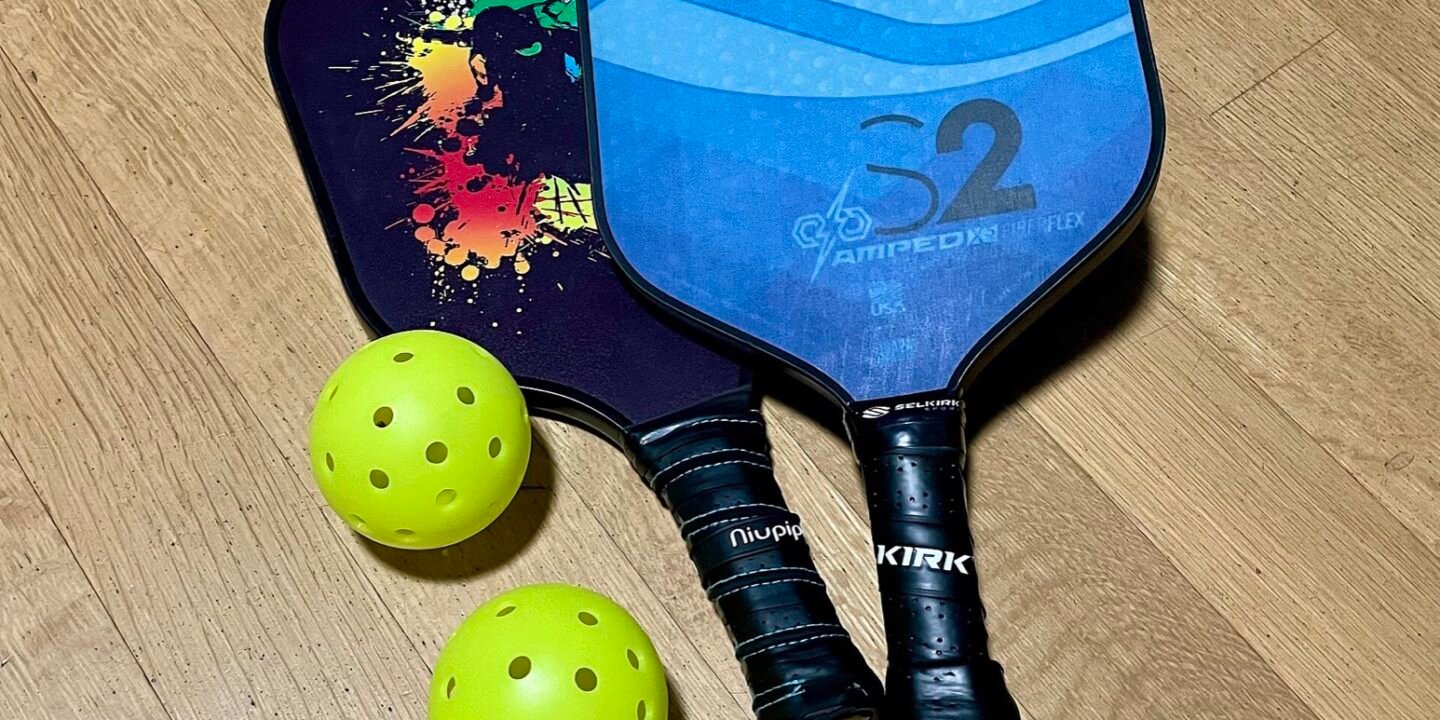
Face texture is where spin comes from — but it is worth less than the swing that uses it.
Photo: E is for Ian · CC BY-SA 4.0 · source

Ask which is the best pickleball paddle for spin and you will be handed a list of RPM figures. Spin is the most heavily marketed property in pickleball and the most misunderstood. Paddles are sold on RPM figures as if the pickleball paddle produces the spin. It does not — your swing produces the spin, and the paddle decides how much of it survives contact.
Disclosure: this page contains affiliate links to Amazon. If you buy through one we may earn a commission, at no extra cost to you. The commission is the same whichever product you choose, so it does not influence what we recommend.
That distinction changes what you should shop for. This guide covers the three specs that actually move the number, in order of how much they matter, and where the marketing gets ahead of the physics.
How this guide was put together: this is a specification-led buying guide, not a hands-on review round-up. Everything below is drawn from manufacturer-published specs, USA Pickleball’s approved equipment list and independently measured community spec databases. Where a paddle has not been through Dink Theory’s own 300-ball test protocol, we do not claim a play verdict on it. This page carries affiliate links, marked and disclosed above; the commission is the same whichever product you choose, and nothing here is sponsored.
What creates spin, in order
- Your swing path (by far the largest factor). Brushing up the back of the ball at speed. No paddle compensates for a flat swing.
- Face texture. Raw, unpainted carbon holds the ball fractionally longer than a coated face. This is the paddle spec that matters most.
- Shape and leverage. An elongated paddle puts the contact point further from your hand, so the tip travels faster for the same arm speed.
- Core thickness. A 16mm core is softer and keeps the ball on the face slightly longer than a 14mm one. Real, but small.
Notice that the top item is free and the rest cost money. A 4.0 player with good technique and a $70 fiberglass paddle will out-spin a 3.0 player with the grittiest paddle on the market, comfortably.
Face: the one spec worth paying for
Raw carbon fiber, unpainted. That is the whole recommendation. The dull grey peel-ply texture left from manufacturing is the friction you are buying, and any clear coat or paint over it fills that texture in and drops grip close to fiberglass levels.
The check takes a second: drag a fingernail across the face. Raw carbon catches; a coated face slides. Plenty of paddles marketed as “carbon fiber” are glossy, and they are not lying about the material — only quiet about the finish. The mechanism is covered in more depth in the carbon fiber paddle guide.
Kevlar and aramid-blend faces are the newer entrant. They grip comparably to raw carbon and feel even more muted, at the cost of some power. Worth trying if you already know you want a dead face.
Shape: elongated wins, and costs you
| Shape | Typical size | Spin potential | Trade-off |
|---|---|---|---|
| Standard | 16 × 8 in | Good | Biggest sweet spot, most forgiving, easiest to handle |
| Elongated | 16.5 × 7.5 in | Highest | Narrower face, smaller sweet spot, higher swing weight |
| Widebody | 15.5 × 8.25 in | Lowest | Most forgiving of all, least leverage |
The catch is real. An elongated paddle is less forgiving on off-centre hits and slower in hands battles at the kitchen line. If you are below about 3.5, a standard shape will win you more points than the extra spin loses you — accuracy beats rotation until your contact is consistent.
What RPM numbers do and do not tell you
Independent testers fire balls at paddles under controlled conditions and publish rotation figures. These are genuinely useful for ranking paddles against each other, because the test conditions are held constant.
They are not a promise about your game. A test rig’s swing is more repeatable than any human’s, and the spread between the top and bottom of the legal range is far narrower than the spread between two club players’ techniques. Read RPM as a relative ordering, and ignore the absolute value.
The gap between the grippiest legal paddle and an average one is smaller than the gap between brushing the ball and hitting it flat.
What to look for, as a shopping list
- Raw carbon or aramid face, matte and unpainted. Non-negotiable if spin is the goal.
- 16mm core for a softer, longer contact.
- Elongated shape if you are 3.5+ and your contact is consistent; standard shape if not.
- Swing weight you can actually handle — an elongated paddle you cannot get around in time costs more than the spin it adds. See the weight guide.
- USA Pickleball approved, if you intend to play sanctioned events.
- Around $130 to $160. This is where the grip-per-dollar curve flattens.
Where the money stops helping
Above roughly $150 you are buying construction quality, edge stability, thermoformed builds and durability — all legitimate things, none of them primarily spin. The measured difference in grip between a well-made $130 raw carbon paddle and a $250 flagship is small.
If spin is specifically what you want, the efficient purchase is a mid-priced raw carbon paddle plus the discipline to actually brush the ball. If you are still developing that swing, spend less and revisit in a season — and note that grit wears out in about a year of regular play regardless of what you paid.
One thing that costs nothing
Clean the face. Sweat, dust and ball residue fill in the texture you paid for, and a damp microfibre cloth restores a surprising amount of bite. Do it between games, not once a season. It will not bring back genuinely worn grit, but it removes the most common reason a paddle feels dead before its time.
Where to look
You can browse raw carbon spin paddles on Amazon. Look for an unpainted carbon or aramid face and a 16mm core.
Common questions
What pickleball paddle generates the most spin?
A raw, unpainted carbon fiber face with an elongated shape and a 16mm core generates the most spin available in a legal paddle. The face texture supplies the friction, the elongated shape gives you more leverage and racket-head speed at the tip, and the thicker core keeps the ball on the face fractionally longer. Any paddle meeting that description sits near the top of the measured spin range.
Does an expensive paddle give you more spin?
Only up to about $150. Above that you are paying for construction quality, edge stability and durability rather than additional grip. The measured spin gap between a good $130 raw carbon paddle and a $250 one is small enough that swing technique swamps it entirely.
What are RPM numbers on pickleball paddles?
RPM figures come from independent testers firing balls at paddles under controlled conditions and measuring rotation. They are useful for ranking paddles against each other, but the absolute numbers do not transfer to your game u2014 a tester's robot swing is more repeatable than any human's. Treat RPM as a relative ranking, not a promise.
Do gritty pickleball paddle faces wear out?
Yes. Raw carbon grit wears down with use, faster on abrasive outdoor courts. Expect a noticeable drop in bite after roughly nine to twelve months of playing three or four times a week. The decline is gradual, so most players do not notice until they hit with a new paddle.
Is a 16mm or 14mm paddle better for spin?
16mm, marginally. The thicker core is softer and holds the ball on the face slightly longer, which gives the texture more time to work. The difference is small compared with face material, and 14mm paddles offer more pop in exchange. If spin is your priority, 16mm is the safer default.