What Are 5 Things You Cannot Do in Pickleball?
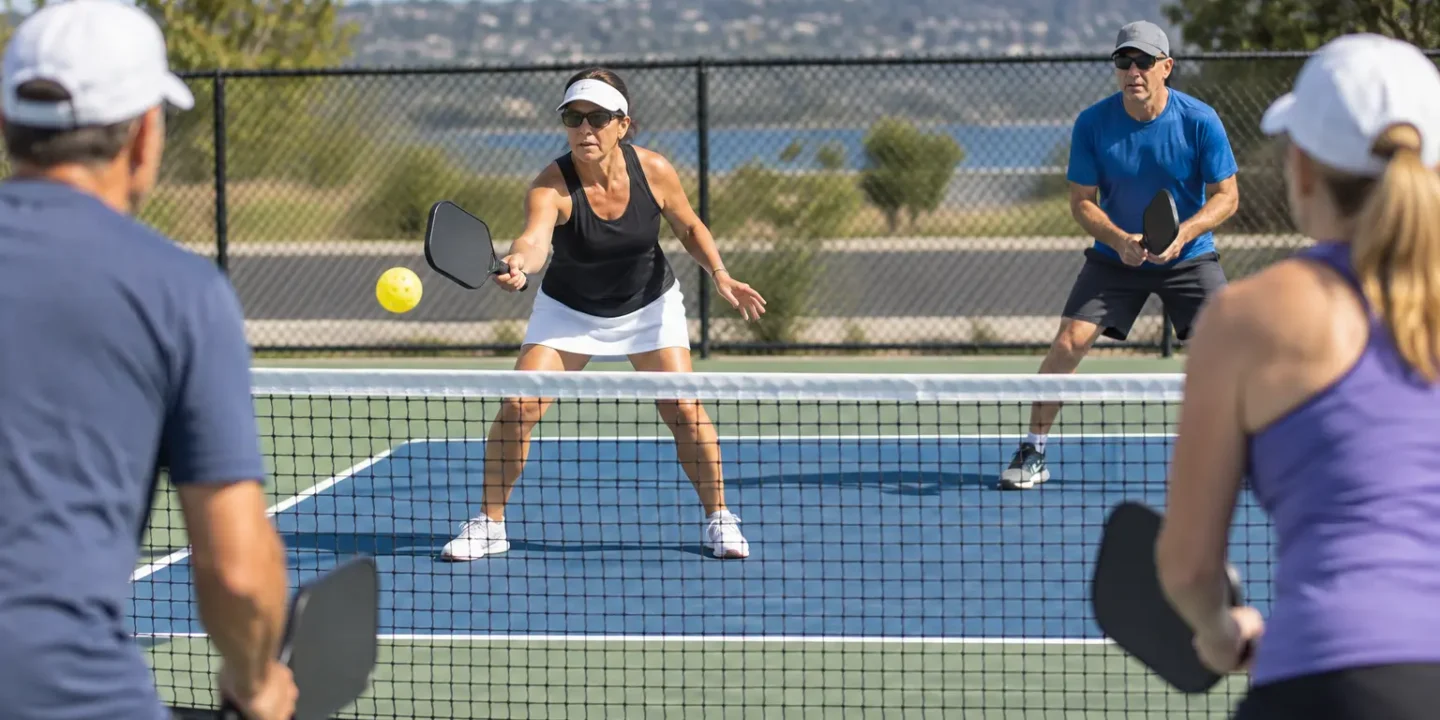
Five things you cannot do in pickleball are volley from the non-volley zone, break the two-bounce rule, serve illegally, touch the net while the ball is live, or deliberately carry or catch the ball on your paddle. Each action is a fault, which ends the rally.
These rules sound simple, but several have details that surprise new players. Here is how to recognize each fault and avoid giving away easy points.
1. You cannot volley from the kitchen
The kitchen is the seven-foot non-volley zone on both sides of the net. You may stand in it and you may hit a ball after it bounces there. What you cannot do is volley—hit the ball before it bounces—while touching the zone or its boundary line.
Your momentum matters too. If you volley from outside the kitchen and then step into it, the result is still a fault, even if the ball is already dead. A hat, paddle, or anything you are carrying cannot touch the zone during the volley action either.
How to avoid the fault
Establish both feet outside the kitchen before volleying. After a close dink, step back out and regain balance before taking the next ball in the air.
2. You cannot ignore the two-bounce rule
After the serve, the receiving team must let the ball bounce before returning it. Then the serving team must let that return bounce before hitting it. These are the first two bounces of every rally, sometimes called the double-bounce rule.
Only after both required bounces may either team volley. The rule prevents immediate serve-and-volley domination and creates time for the rally to develop.
How to avoid the fault
When your team serves, stay behind the baseline long enough to receive the return after its bounce. Do not drift forward automatically while your partner serves.
3. You cannot use an illegal serve
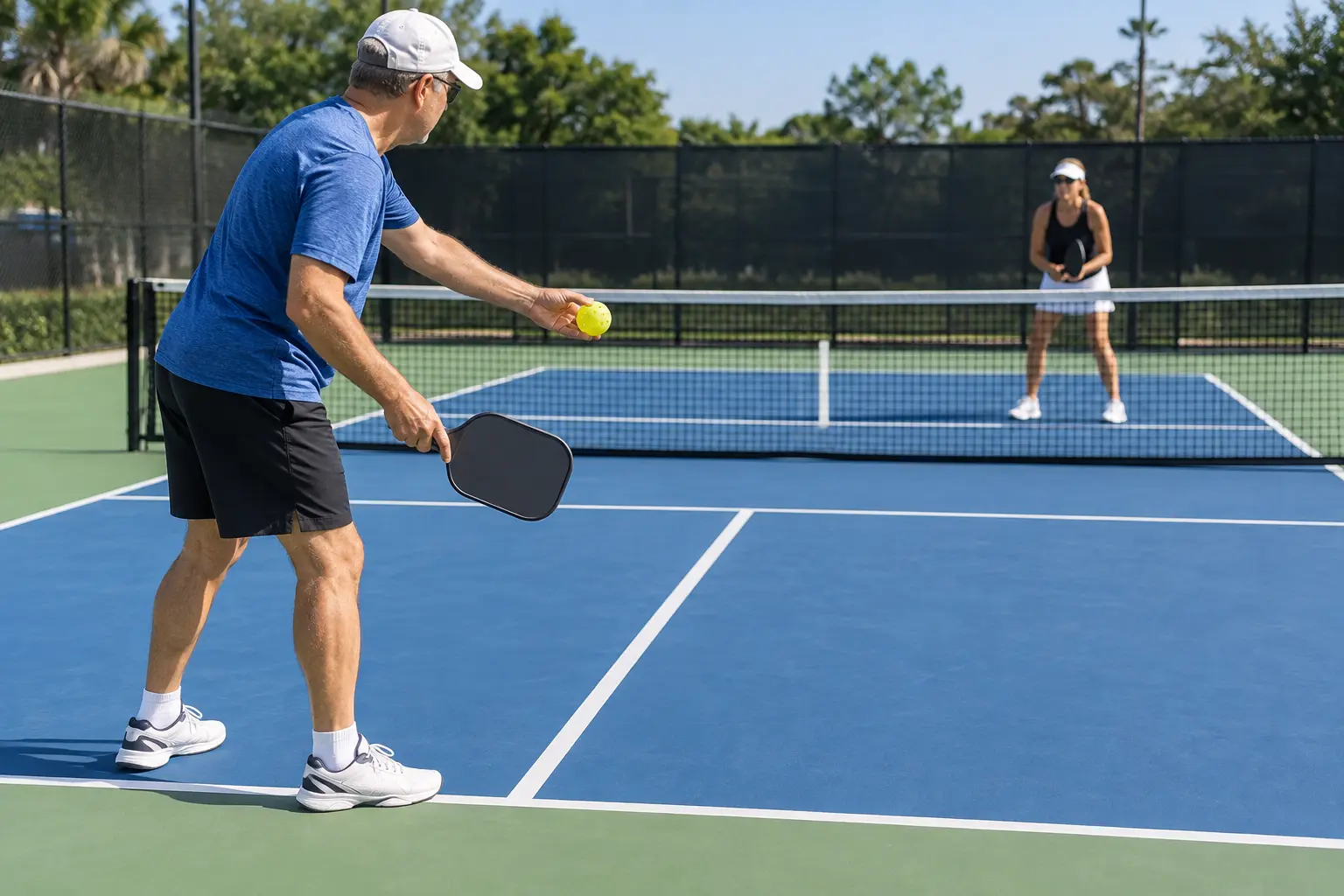
A legal serve travels diagonally into the correct service court and clears the kitchen. The server must begin from behind the baseline, between the imaginary extensions of the sideline and centerline.
For a volley serve, contact must meet the required underhand motion standards. A drop serve must come from an unassisted drop: you cannot throw the ball downward or toss it upward to manufacture a bounce. You also cannot deliberately add spin while releasing the ball before contact. Spin created by the paddle at contact is allowed.
How to avoid the fault
Use a repeatable routine. Set both feet behind the baseline, announce the score, release the ball plainly, and swing through a comfortable target well inside the service box.
4. You cannot touch the net during a live rally
A player, paddle, clothing, or anything the player carries may not touch the net system while the ball is live. Reaching over a low ball and brushing the net is a fault, even if the shot would otherwise be a winner.
You may reach over the net only in the unusual situation where a ball bounces on your side and then spins or blows back over. Even then, you must not touch the net or the opponent’s court.
How to avoid the fault
Keep a small buffer from the net, especially on aggressive erne attempts or when chasing a ball with heavy backspin.
5. You cannot catch, carry, or deliberately double-hit the ball
A legal paddle contact is a hit, not a throw. If the ball visibly rests on the paddle or is carried along its face, the shot is a fault. A double hit may be legal only when it happens during one continuous, single-direction stroke and is not intentional.
How to avoid the fault
Use a short, firm paddle path on soft shots. Trying to scoop the ball with an open paddle face makes a carry more likely.
Other actions that cause faults
- Hitting the ball out of bounds or into the net.
- Allowing the ball to bounce twice before returning it.
- Being struck by the ball before it bounces out.
- Volleying while your momentum carries you into the kitchen.
- Serving before the complete score has been called.
- Failing to serve within ten seconds after the score is called.
- Distracting an opponent during play.
What happens after a fault?
Under traditional side-out scoring, a fault by the serving team normally results in loss of serve or a move to the second server in doubles. A fault by the receiving team awards a point to the server. Formats using rally scoring handle points differently, so confirm the format before play begins.
Frequently asked questions
Can I step into the kitchen if the ball bounces?
Yes. The kitchen is a non-volley zone, not a no-entry zone. You may enter it to play a bounced ball.
Can the serve land on the kitchen line?
No. The non-volley-zone line is part of the kitchen, so a serve touching that line is a fault. The centerline, sideline, and baseline of the correct service court are in.
Can the ball hit my hand?
If the ball hits the hand holding the paddle below the wrist during a rally, it is treated as contact with the paddle. Contact elsewhere on the body is a fault.
Bottom line
The easiest way to remember these restrictions is to focus on five areas: kitchen, bounces, serve, net, and clean contact. Once those habits become automatic, you can spend less time worrying about faults and more time building smart points.
For more beginner help, read our guide to pickleball mistakes and how to fix them.