Can I Step in the Kitchen Before the Ball Bounces in Pickleball?
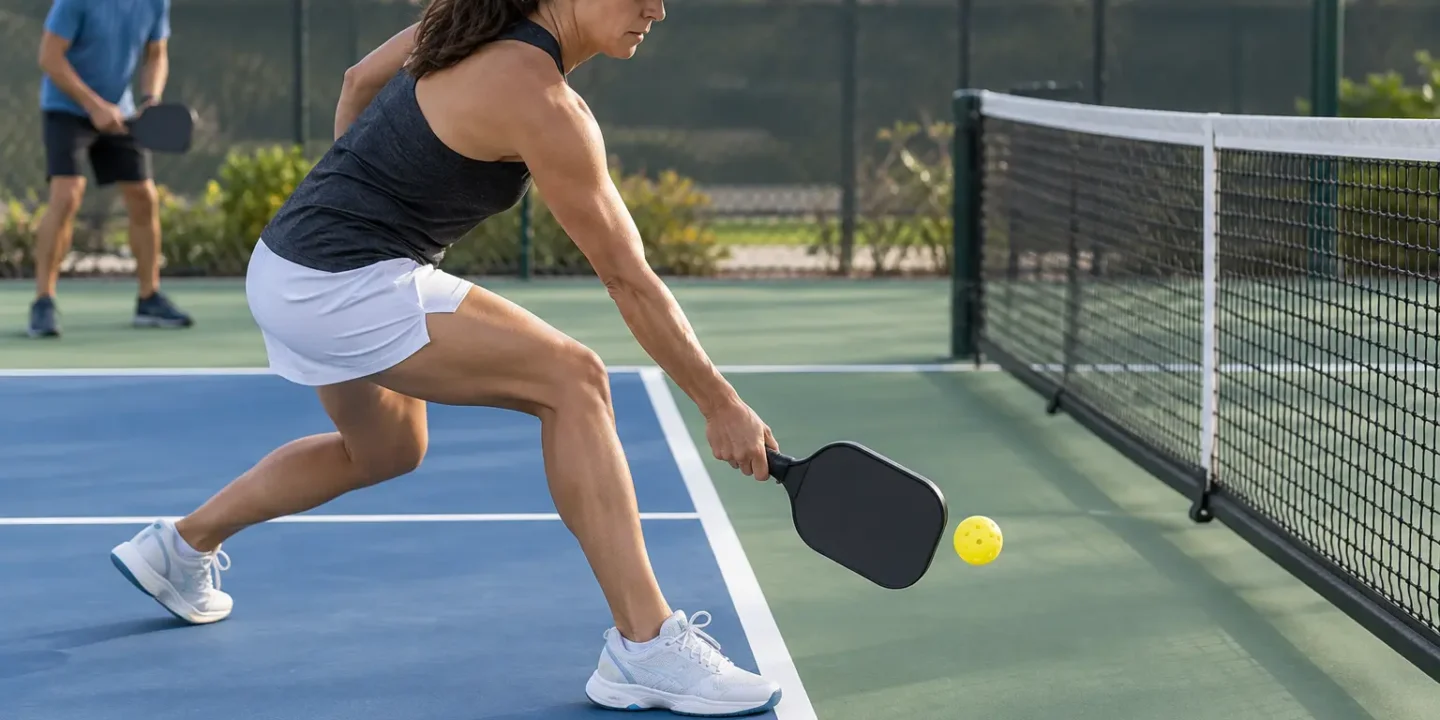
Yes, you can step into the kitchen before the ball bounces in pickleball. The non-volley zone is not a forbidden area. You may enter it, stand in it, and leave it whenever you want. The restriction is that you cannot volley the ball while touching the kitchen or its boundary line.
This distinction causes more confusion than almost any other pickleball rule. Understanding it will help you play confidently near the net and avoid unnecessary fault calls.

The kitchen is a non-volley zone, not a no-entry zone
A volley is a shot hit out of the air before the ball bounces. The kitchen rule controls where you may stand during a volley. It does not require you to wait for a bounce before entering the area.
For example, you can step into the kitchen while an opponent is preparing to dink. If the ball bounces, you may hit it. If the opponent instead sends the ball high enough for a volley, you must let it bounce or move completely outside the kitchen before striking it in the air.
When is stepping into the kitchen a fault?
Stepping into the kitchen becomes a fault when it is connected to a volley. A fault occurs if:
- You volley while either foot touches the kitchen or its boundary line.
- Your paddle, clothing, hat, or anything you carry touches the zone during the volley action.
- Your momentum after a volley carries you into the kitchen.
- You touch a partner who is standing in the kitchen while volleying.
The momentum rule continues until you regain control and balance. It does not matter if the volley is a winner or if the ball becomes dead before you step into the zone.
Do I have to leave the kitchen before the ball bounces?
No. You may remain in the kitchen and play a ball after it bounces. You may also let multiple balls bounce there over the course of a point. There is no time limit requiring you to exit.
However, if you want to volley the next shot, both feet must re-establish contact with the playing surface completely outside the kitchen. Jumping from inside the zone, volleying in the air, and landing outside is still a fault because your last contact with the court was inside the zone.
Does the kitchen line count as part of the kitchen?
Yes. The non-volley-zone line belongs to the kitchen. A toe touching the line during a volley creates the same fault as standing several feet inside the zone.
This is different from a regular rally ball landing on the line, which is in. On a serve, however, the ball must clear the kitchen and its line; a serve that touches the non-volley-zone line is short and therefore a fault.
Practical examples
Example 1: entering early
You see a soft ball heading toward the kitchen. You step in before it lands, wait for the bounce, and dink it back. This is legal.
Example 2: changing your mind
You step into the kitchen expecting a bounce, but the ball stays high. You let it bounce before hitting. This is legal. If you hit it before the bounce, it is a fault.
Example 3: volley momentum
You volley from behind the line, lose balance, and step into the kitchen. This is a fault—even if your opponent cannot return the shot.
Example 4: re-establishing outside
You dink from inside the kitchen, step back so both feet touch outside the line, then volley the next ball. This is legal once control is established outside.
Example 5: partner contact
Your partner stands in the kitchen and you volley from outside. If you touch your partner during the act of volleying, your team commits a fault.
Why skilled players enter the kitchen
Advanced players step into the zone constantly to reach short dinks before they drop too low. The goal is usually to contact the ball near the top of its bounce, then recover behind the line quickly enough to be ready for a volley.
This movement is called stepping in and out of the kitchen. It improves reach without sacrificing a strong ready position at the line.
A simple footwork drill
- Begin just behind the kitchen line in a balanced ready position.
- Have a partner feed a soft ball that lands near the net.
- Step in with the foot closest to the ball.
- Let the ball bounce, dink it, and push back behind the line.
- Pause with both feet established outside before the next feed.
Practice on both sides. Keep your chest upright and avoid crossing your feet so you can recover quickly.
Frequently asked questions
Can I stand in the kitchen while my partner hits the ball?
Yes, provided you do not participate in a volley fault. Be careful not to touch your partner if your partner volleys from outside the zone.
Can I jump over the kitchen to hit a volley?
An erne can be legal when you jump from outside the kitchen, strike the ball, and land outside the court without touching the zone. Jumping from inside the kitchen does not establish you outside and is a fault.
Can my paddle cross above the kitchen?
Yes. The kitchen is defined by the court surface and lines, not the air above it. You may reach over the zone while volleying as long as you and anything you are wearing or carrying do not touch the zone.
Bottom line
You may step into the kitchen before the ball bounces. Just remember: entering is legal; volleying while connected to the zone is not. Let the ball bounce, make your shot, and re-establish both feet outside before attempting a volley.
Avoid more common rule errors with our guide to pickleball mistakes.