Indoor vs outdoor pickleball balls: the difference that actually matters
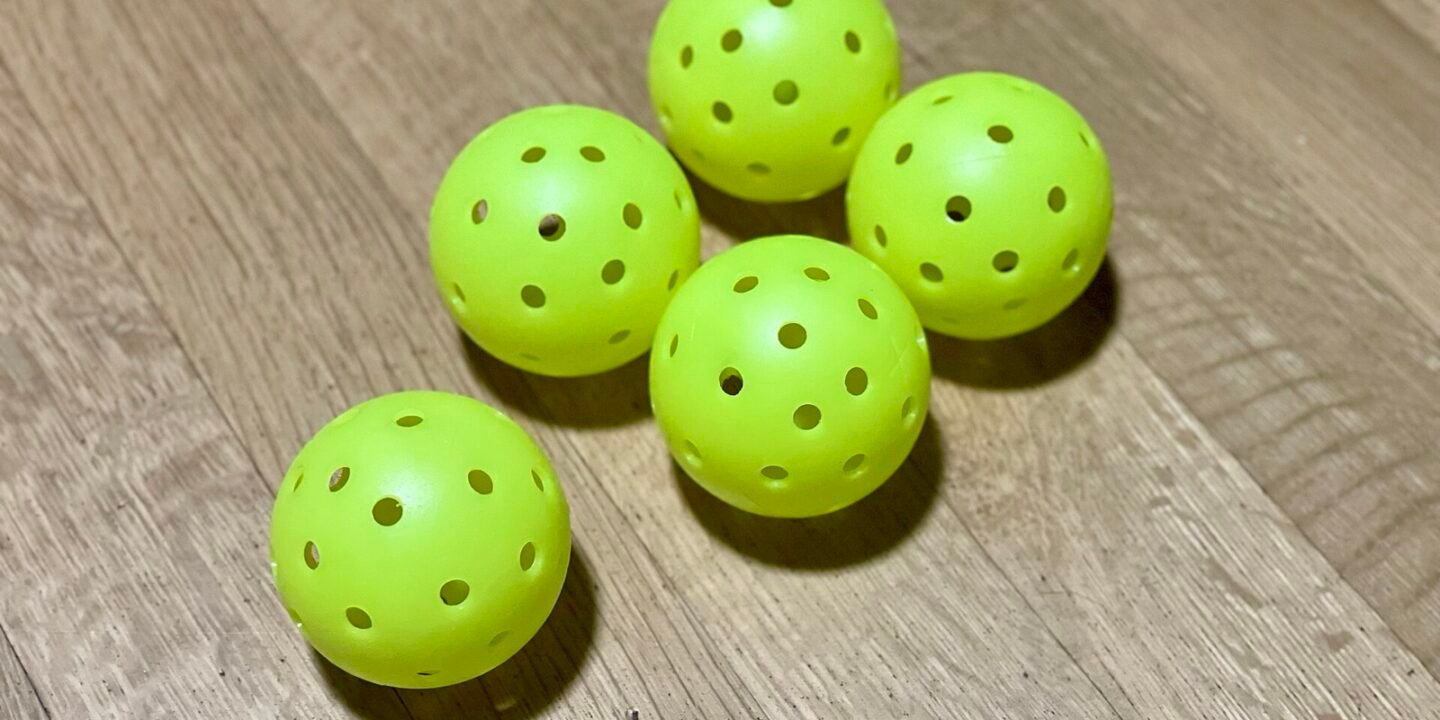
Count the holes. Twenty-six large ones means indoor; forty small ones means outdoor.
Photo: E is for Ian · CC BY-SA 4.0 · source

Indoor pickleball balls and outdoor ones can look almost identical in a bin and play like different sports. The difference is not branding — it is hole count, wall thickness and about two grams of plastic, and it changes how far the ball flies, how fast it comes off the paddle and whether your dinks stay down.
This is the cheapest mistake in pickleball to fix and one of the most common. Here is how to tell the two apart and which one you actually want.
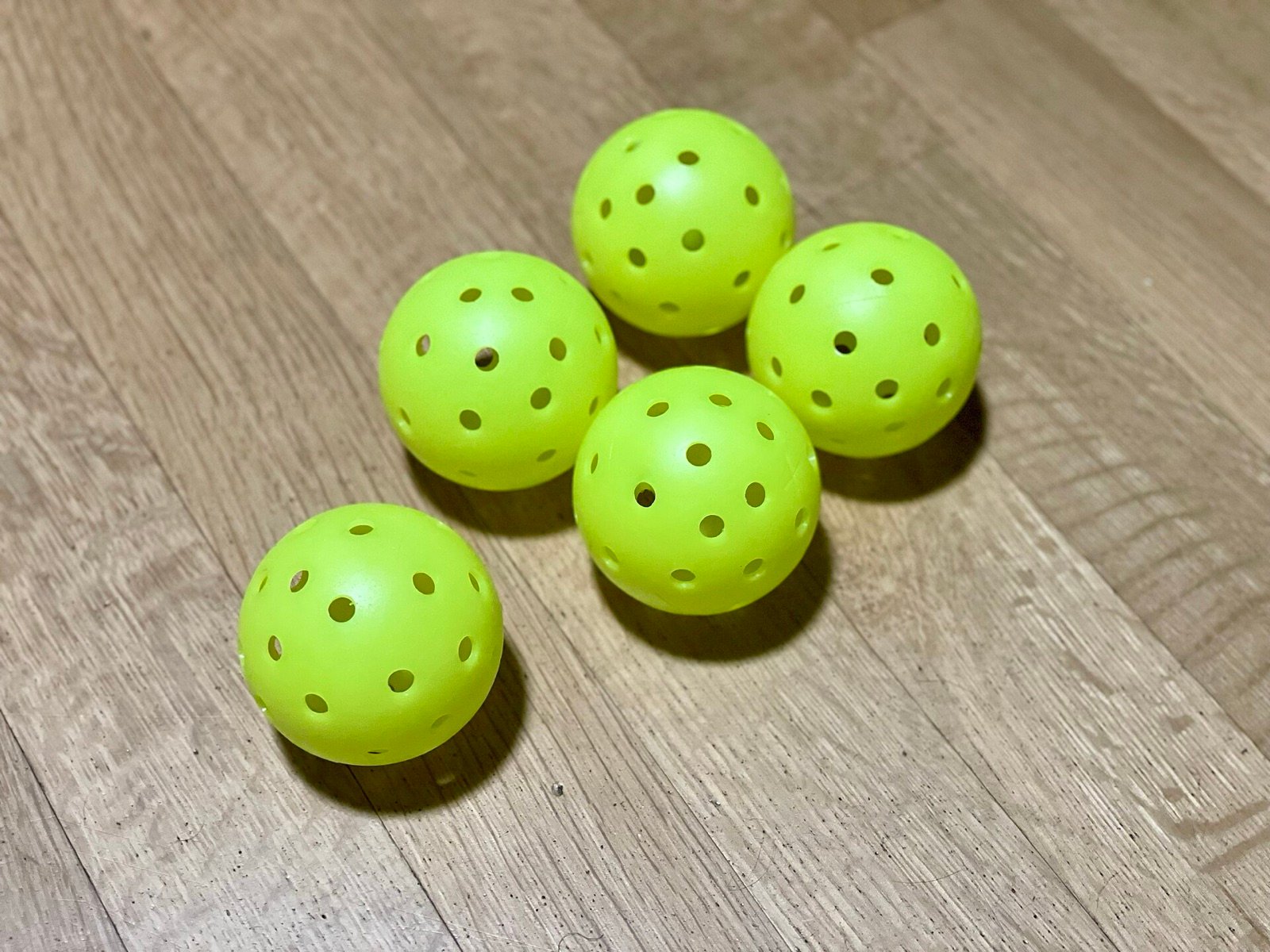
The short version
| Indoor | Outdoor | |
|---|---|---|
| Holes | 26, larger | 40, smaller |
| Plastic | Softer, more flexible | Harder, more brittle |
| Weight | ~0.80 oz | ~0.90 oz |
| Off the paddle | Slower, more grip | Faster, skids |
| Noise | Quieter, duller | Sharp click |
| Fails by | Going soft over months | Cracking, often suddenly |
| Wind | Blown off line easily | Holds its line |
Why outdoor balls are built the way they are
Outdoor pickleball has one enemy indoor pickleball does not: wind. A light ball with big holes gets pushed sideways by a breeze that you would not notice on your skin. So outdoor balls are made heavier and harder, with more, smaller holes, which lets them cut through moving air and hold a line.
The consequences follow logically. A harder ball deforms less on impact, so it leaves the paddle faster and grips the face less — which is why spin is harder to generate outdoors and why raw carbon faces earn their keep there. Harder plastic is also more brittle, which is why outdoor balls crack rather than soften.
Why indoor balls feel so different
Indoors there is no wind to fight, so the design optimises for control and noise instead. Softer plastic and fewer, bigger holes mean the ball deforms more against the face, stays on it fractionally longer, and comes off slower.
Practically: rallies last longer, dinks are easier to keep low, and the ball is noticeably quieter — which matters more than it sounds when eight courts share one gym. The trade is that an indoor ball scuffs and goes soft rather than cracking, and it will not survive long on concrete.
How to identify a ball in three seconds
- Count the holes on one face. Big and few means indoor. Small and many means outdoor.
- Squeeze it. An indoor ball gives slightly. An outdoor ball feels like a rock.
- Bounce it once. A dull thud is indoor; a sharp crack is outdoor.
- Check the print. Most manufacturers write “indoor” or “outdoor” on the ball, though it wears off fast.
Using the wrong ball
Nothing breaks and no rule is violated — this is a playability question, not a legality one.
- Outdoor ball indoors: common and mostly fine. Faster and louder, less bite on the face, so touch shots get harder. Lasts far longer than an indoor ball would.
- Indoor ball outdoors: frustrating. Any breeze moves it, and it scuffs badly on concrete within a session or two. Avoid unless it is genuinely still.
- Mixed balls in one game: the actual problem. Everyone recalibrates every rally. Pick one and stick to it.
When to throw a ball away
Players keep dead balls in rotation far too long, then wonder why their drops are inconsistent. A ball is finished when any of these is true:
- It has a visible crack, however small. Cracked balls fly unpredictably and are done.
- It is out of round — spin it on a flat surface and watch it wobble.
- It has gone soft and the bounce is dead. Drop it next to a new ball from shoulder height and compare.
- The sound has changed from a click to a rattle.
Expect two to six hard sessions from an outdoor ball on concrete, and months from an indoor ball on wood. Buy outdoor balls by the dozen; buying three at a time is how you end up playing with cracked ones.
What to buy
For outdoor play in the US, the Franklin X-40 and Dura Fast 40 have been the de facto tournament standards for years, with the Vulcan VPRO Flight and Selkirk Pro S1 close behind. Indoors, the Onix Fuse and Jugs balls are the common choices.
Two rules matter more than the brand. First, if you intend to play sanctioned tournaments, buy a USA Pickleball approved ball so you practise with what you will compete on. Second, make sure everyone in your regular group uses the same one — the difference between two approved outdoor balls is smaller than the difference between playing a familiar ball and an unfamiliar one.
Balls sit alongside shoes as the gear that actually changes your results. Paddles get the attention, but see why court shoes matter more than a paddle upgrade.
Common questions
What is the difference between indoor and outdoor pickleball balls?
Outdoor balls have 40 small holes, harder plastic and slightly more weight so wind does not push them around. Indoor balls have 26 larger holes, softer plastic and less weight, which makes them slower, quieter and easier to control. An outdoor ball on a gym floor plays fast and skids; an indoor ball outside gets blown off line by any breeze.
Can you use an outdoor pickleball ball indoors?
You can, and plenty of gyms do because outdoor balls last longer on abrasive surfaces. It plays faster and louder than an indoor ball, with less grip on the face, so drop shots and dinks are harder to control. It is a downgrade in feel, not a rules problem.
How many holes does a pickleball have?
Outdoor pickleballs have 40 holes; indoor pickleballs typically have 26. The count is the quickest way to identify a ball at a glance. USA Pickleball requires between 26 and 40 circular holes for approved balls, which is why both sit at the ends of that range.
How long does a pickleball ball last?
An outdoor ball played hard on concrete may crack or go out of round in two to six sessions. Indoor balls on a wood floor often last months, because the surface is not grinding them down. A ball is finished when it goes soft, oval, or starts making a dull rattle instead of a crisp click.
What are the best outdoor pickleball balls?
The tournament standard for outdoor play in the US has for years been the Franklin X-40 and the Dura Fast 40, with the Vulcan VPRO Flight and Selkirk Pro S1 also widely used. What matters more than the brand is that everyone in the game uses the same ball, and that it is USA Pickleball approved if you plan to play sanctioned events.