Pickleball bags: sling, backpack or duffel, and what to look for
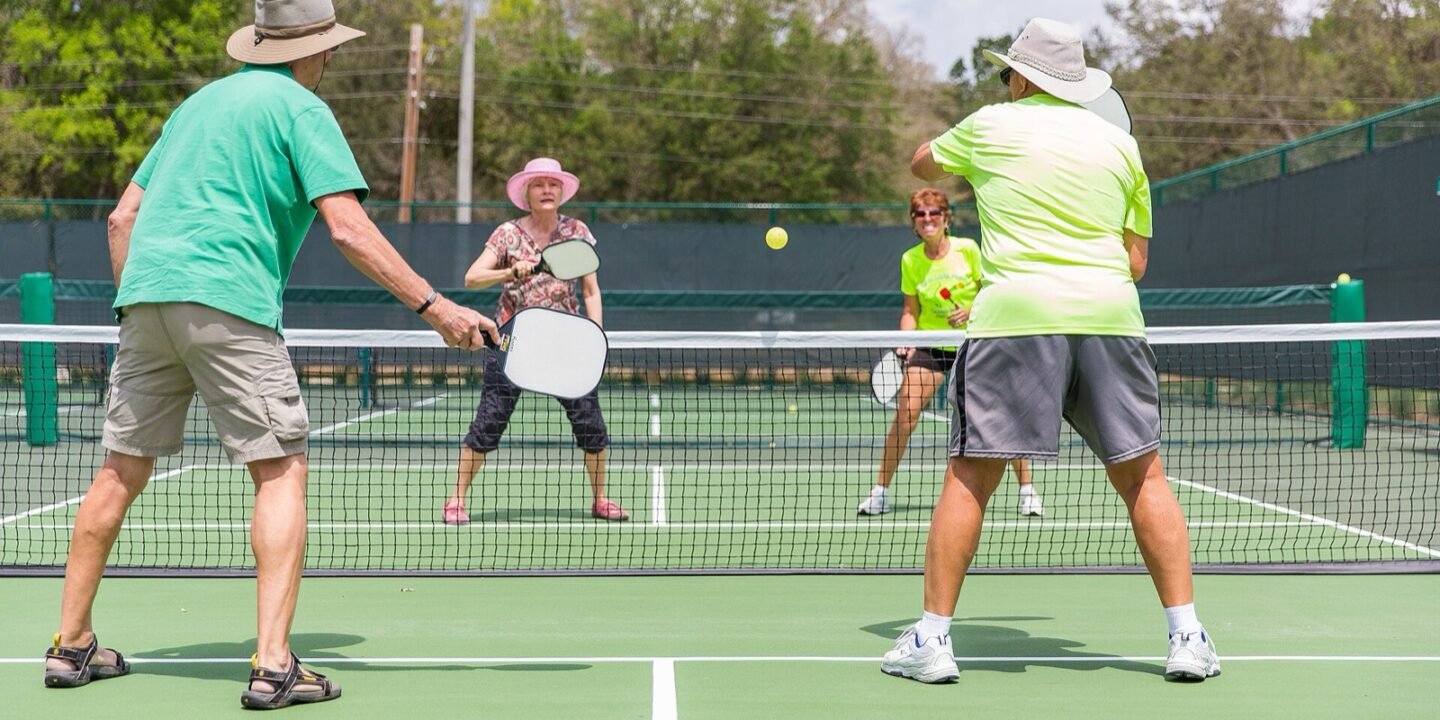
Four players, four sets of gear. All of it arrived in something, and most of it arrived in the wrong thing.
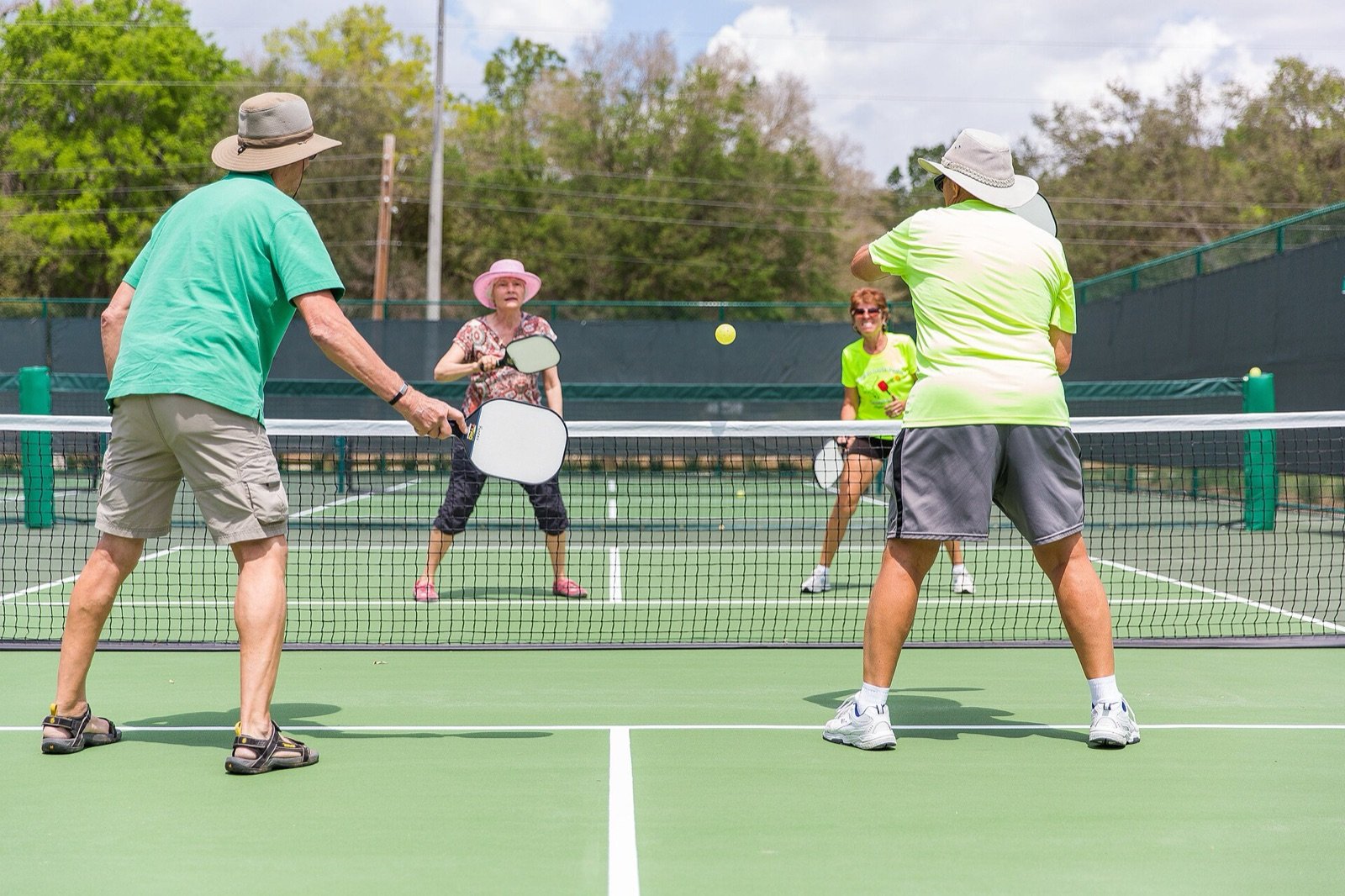
Photo: TheVillagesFL · CC BY-SA 4.0 · source

A pickleball bag is a low-stakes purchase that people still manage to get wrong, usually by buying far more capacity than the sport needs. Pickleball gear is small: two paddles, some balls, a bottle and a towel. The bag’s job is not to hold a lot — it is to stop your paddle getting chipped and your damp shoes getting into everything else.
This page covers the three formats, the four features that actually matter, and where the money stops helping.
Disclosure: this page contains an affiliate link to Amazon. If you buy through it we may earn a commission, at no extra cost to you. It does not change what we recommend — we are paid the same whichever bag you choose, and nothing in this guide is sponsored.
The three formats
| Format | Carries | Best for | Trade-off |
|---|---|---|---|
| Sling | 1 paddle, balls, bottle, keys | Turn up and play, short sessions | No room for shoes or a second paddle |
| Backpack | 2 paddles, shoes, bottle, kit | Drilling, long sessions, straight from work | Bulkier than most players need |
| Duffel / tote | 3+ paddles, shoes, spares | Carrying gear for others, tournaments | Heavy, awkward, usually overkill |
Sling bags
A single strap across the body, one main compartment, usually a paddle sleeve on the outside. If you drive to a court, play for ninety minutes and drive home, this is all you need — and it stays out of the way if you leave it courtside.
Backpacks
The default for anyone playing more than twice a week. Two paddles, a vented shoe compartment, bottle holders on both sides, and a small pocket for the things you lose. The main risk is buying one built for tennis, which is deeper than pickleball requires and encourages you to carry things you never use.
Duffels
Genuinely useful if you are the person who brings spare paddles so friends can play, or if you travel to tournaments with shoes, a change of clothes and a dozen balls. For everyone else it is a large bag that gets carried half empty.
The four features that matter
- A padded, separate paddle compartment. The single most useful feature. Most paddle damage is edge-guard chipping from keys, bottles and zips in a shared compartment — not from play. If a bag has no paddle sleeve, budget for a paddle cover.
- Ventilation. A vented shoe pocket, or at minimum a mesh panel. Outdoor pickleball is sweaty and shoes go in damp. A sealed bag is how a bag starts to smell permanently.
- External bottle holders. Preferably two, and preferably not the shallow elastic kind that spits a bottle out when you swing the bag onto your shoulder.
- A fence hook. Underrated. Courts are wet, dusty or both, and a hook keeps your gear off the ground and where you can see it.
What you do not need to pay for
- Huge capacity. Pickleball gear is compact. A bag sized for six paddles gets carried mostly empty.
- Thermal or insulated compartments. Marketed for keeping balls at temperature. In practice a non-issue outside real extremes.
- Heavy branding. A logo does not add a feature, and paddle-brand bags often cost more than an equivalent generic one.
- Tennis-specific bags. Built around racket length you do not have. You are paying for depth you will not fill.
Matching the bag to how you actually play
You play socially, once or twice a week
A sling with a padded paddle sleeve. One paddle, a sleeve of balls, a bottle, keys. Anything larger is storage you will carry around empty.
You drill, or play several hours at a time
A backpack with a vented shoe compartment. You will want a second paddle, a spare overgrip, a towel, and more water than a sling holds — see the accessories guide for what earns its space.
You are the organiser
A duffel, because you are carrying loaner paddles and a dozen balls for people who do not own any. If you are equipping a group from scratch, a pickleball set is usually the cheaper route than buying paddles individually.
What to put in it
The realistic load, which fits comfortably in a small backpack:
- One or two paddles, in their compartment or covers.
- A sleeve of balls matched to your surface — indoor and outdoor balls are not interchangeable.
- A water bottle, and a second one for outdoor summer sessions.
- A spare overgrip and a small towel. Sweat on the paddle face costs more grip than any coating adds.
- Sunscreen and a hat for outdoor play.
- Athletic tape or blister plasters if you play more than twice a week.
Where to look
Bags are one of the few pickleball purchases where the market is broad and the differences are mostly practical rather than technical, so it is worth browsing on specification rather than brand. You can browse current pickleball bags on Amazon and filter against the four features above — padded paddle compartment, ventilation, bottle holders, fence hook.
Whatever you choose, the useful test is whether your paddle travels in its own padded space. A $30 bag that does that will protect your gear better than a $90 bag that does not.
Looking after it
Empty it after outdoor sessions rather than leaving damp shoes and a wet towel sealed in overnight — that is what turns a bag permanently musty. Wipe grit off the paddle compartment occasionally, since sand and court dust are what scuff a face in storage. And keep the bag out of a hot car boot in summer, which is harder on paddle epoxy than play is.
Common questions
What should I look for in a pickleball bag?
Four things: a padded, separate paddle sleeve so faces do not get chipped, ventilation or a vented shoe compartment, at least one external water bottle holder, and a fence hook so the bag does not sit on wet ground. Everything beyond that is preference. Capacity matters less than most people expect, because pickleball gear is small.
What is the difference between a pickleball sling bag and a backpack?
A sling has one strap and carries one paddle, a few balls, keys and a bottle. A backpack has two straps, a dedicated paddle compartment and usually a vented shoe pocket, and carries two paddles plus a change of shoes. Slings suit players who turn up and play; backpacks suit players who drill, play several hours, or come straight from work.
Do I need a special pickleball bag?
No. Any bag with a padded sleeve will protect a paddle, and plenty of players use a small gym bag. What a purpose-made bag adds is a separate paddle compartment that stops keys and bottles chipping the edge guard, and a vented pocket so damp shoes are not sitting against your clothes.
How do you carry a pickleball paddle without damaging it?
Keep it in its own padded compartment or a paddle cover, face-in, away from keys, bottles and zips. Most paddle damage is edge-guard chipping from loose items in a shared compartment, not from play. A $10 paddle cover solves it if your bag has no dedicated sleeve.
How big should a pickleball bag be?
Smaller than you think. One or two paddles, a sleeve of balls, a bottle, a towel and a spare overgrip is the realistic load, and that fits a sling or a small backpack. Large duffels only earn their space if you carry shoes, a change of clothes, or gear for other people.